MSFS 2024 Status:
Investigating Marketplace
Support the site - donate!

AH Boeing P26A

Aeroplane Heaven

AIRCRAFTSINGLE PROPVINTAGE

4.5/5 (2)


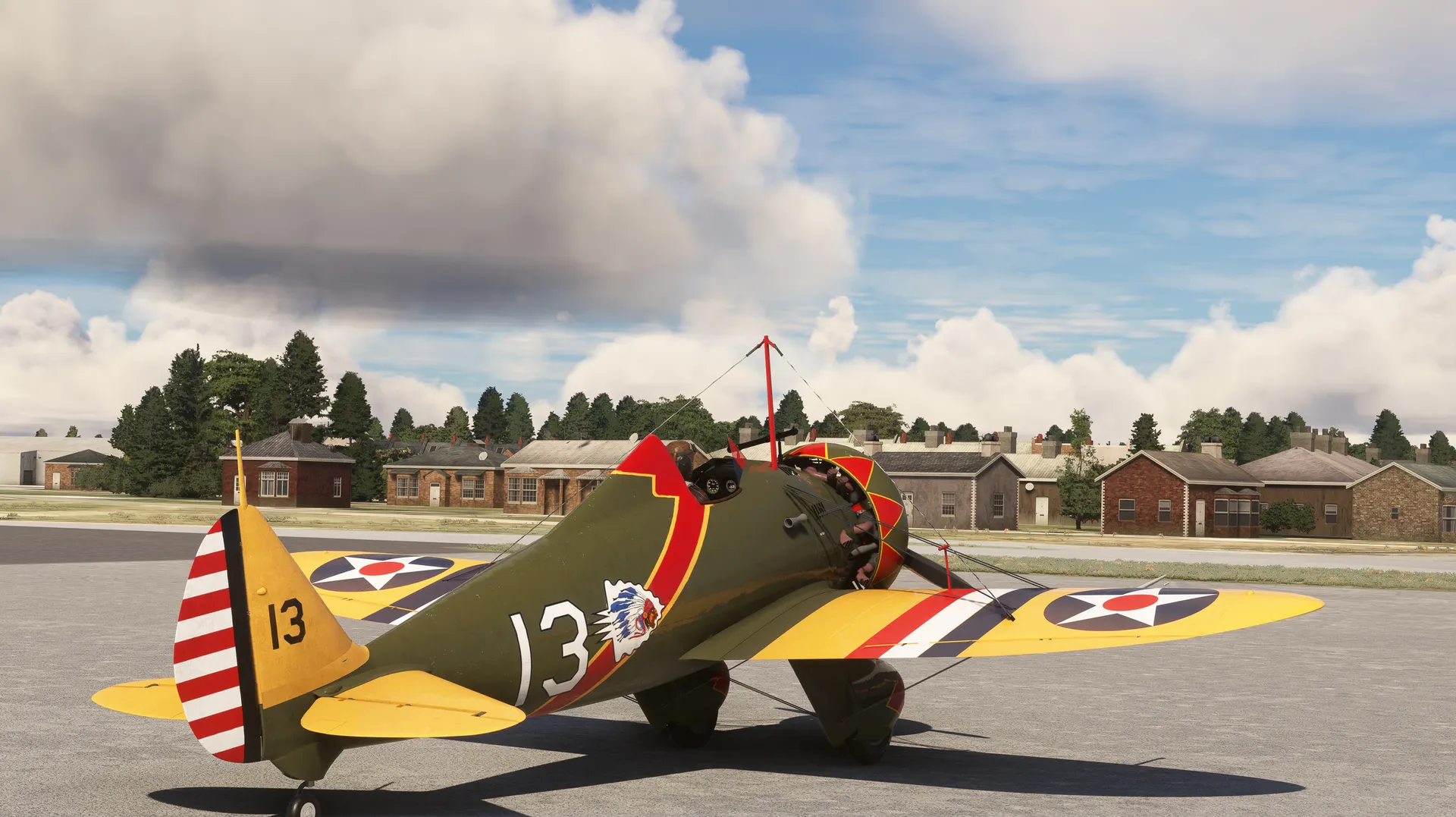
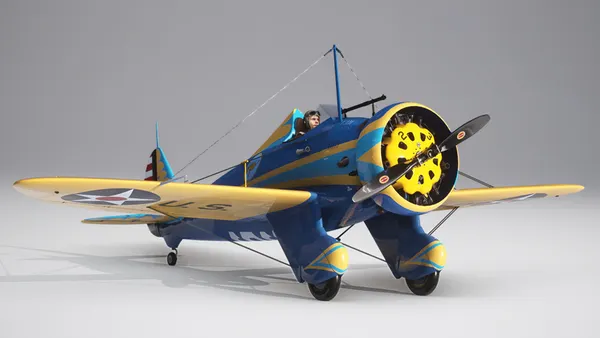
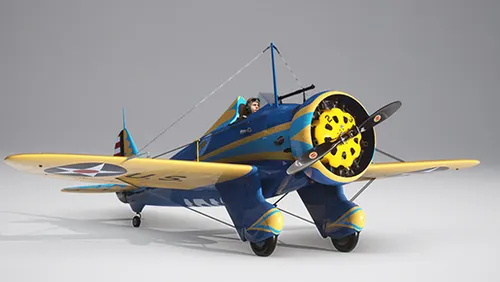
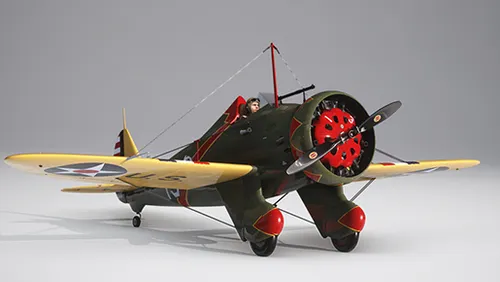
The Boeing P26 was the first American all-metal fighter.Also the first pursuit monoplane to enter service with the United States Army Air Corps. The design featured an open cockpit and low monoplane wing, braced with wires and struts. Landing gear was fixed and completely faired-in.The wings carried trailing edge flaps.

The airframe was powered by a 600hp Pratt & Whitney Wasp 9 cylinder radial engine.The propeller was a metal twin-blade, fixed-pitch type.Maximum speed was 234mph and the P26A had a combat range of 360 miles.

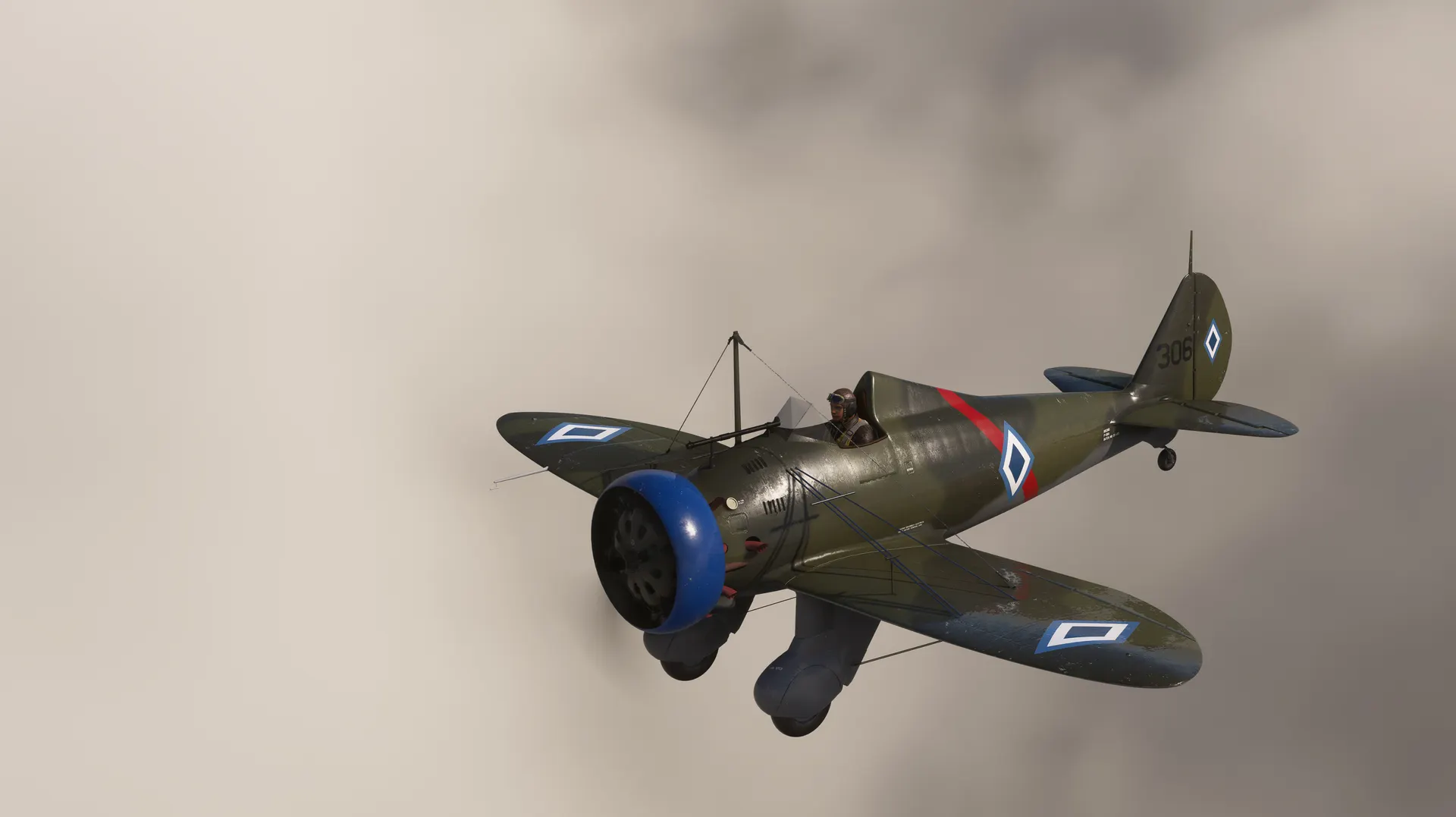
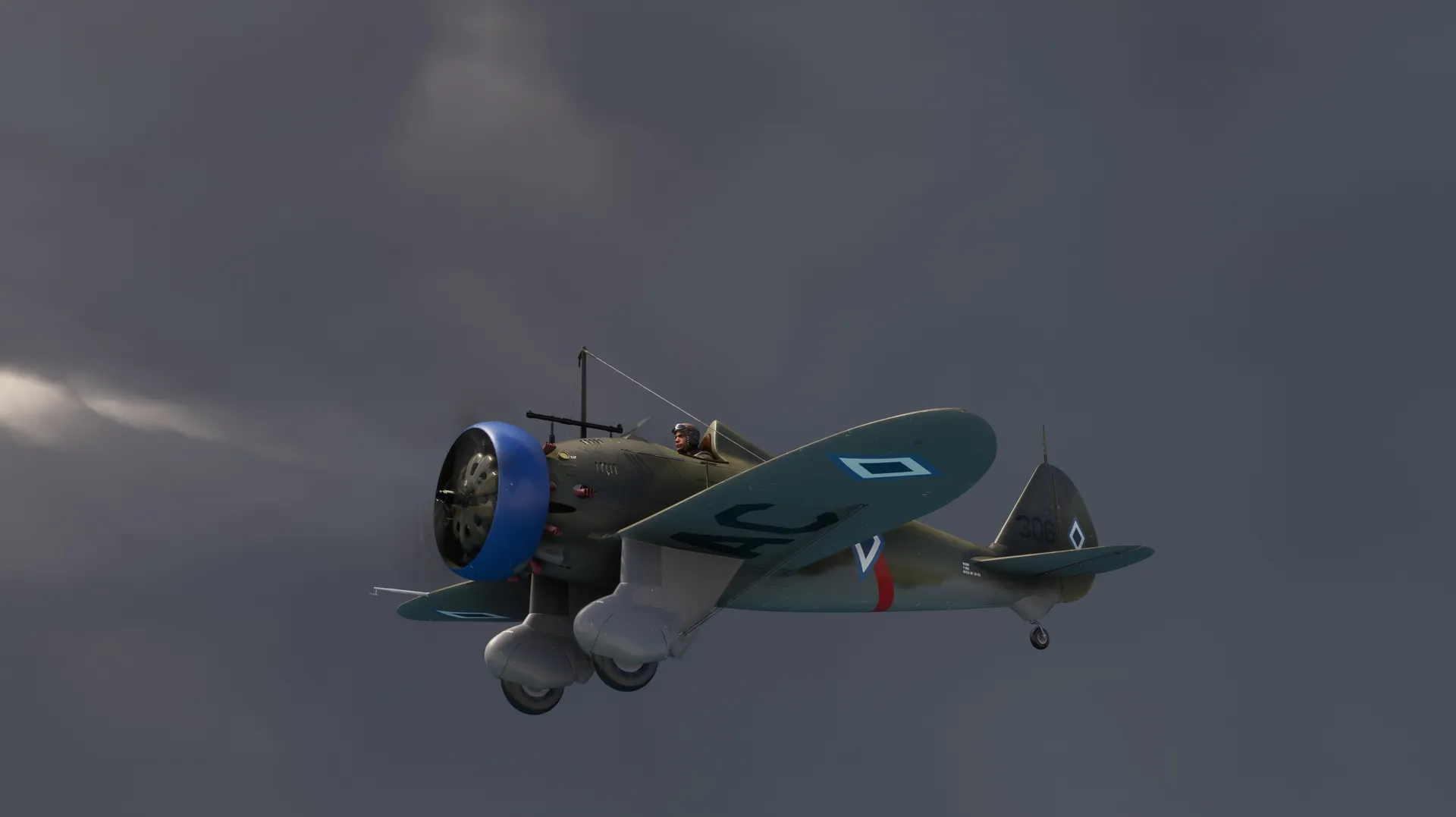
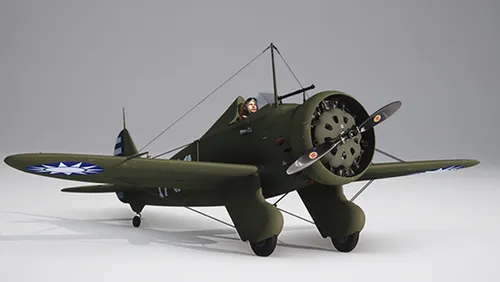
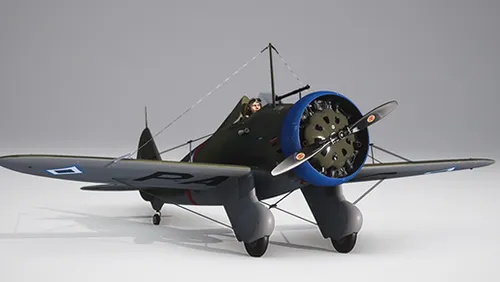
Armament came in the shape of two 50 caliber Browning machine guns. The prototype first flew o0n 20th March 1932 and a total of 111 of the PA26 version were built. The long tubular gunsight right in front of the pilot screen reminded many of a peashooter-the child's toy. So the name stuck with pilots and became history. By the time the United States entered WW2, most P26s had been relegated to training roles. However P26s were supplied to the Chinese Nationalist Air Force and were relatively successful. Chinese pilots shot down several Japanese medium bombers and also took part in the first all-metal fighter dog-fights with Mitsubishi AM5Ms.US pilots flying the P26 in the Philippines also had success, shooting down several A6M Zeros and Betty medium bombers. Too slow and comparitively out-dated, the P26 was soon overtaken by the new generation of monoplane fighters arriving at the front-lines of WW2 and the type was retired from active combat duty.

Only one example of the P26A remains in airworthy condition at the Planes of Fame Museum in California but several examples have been restored for museum display.
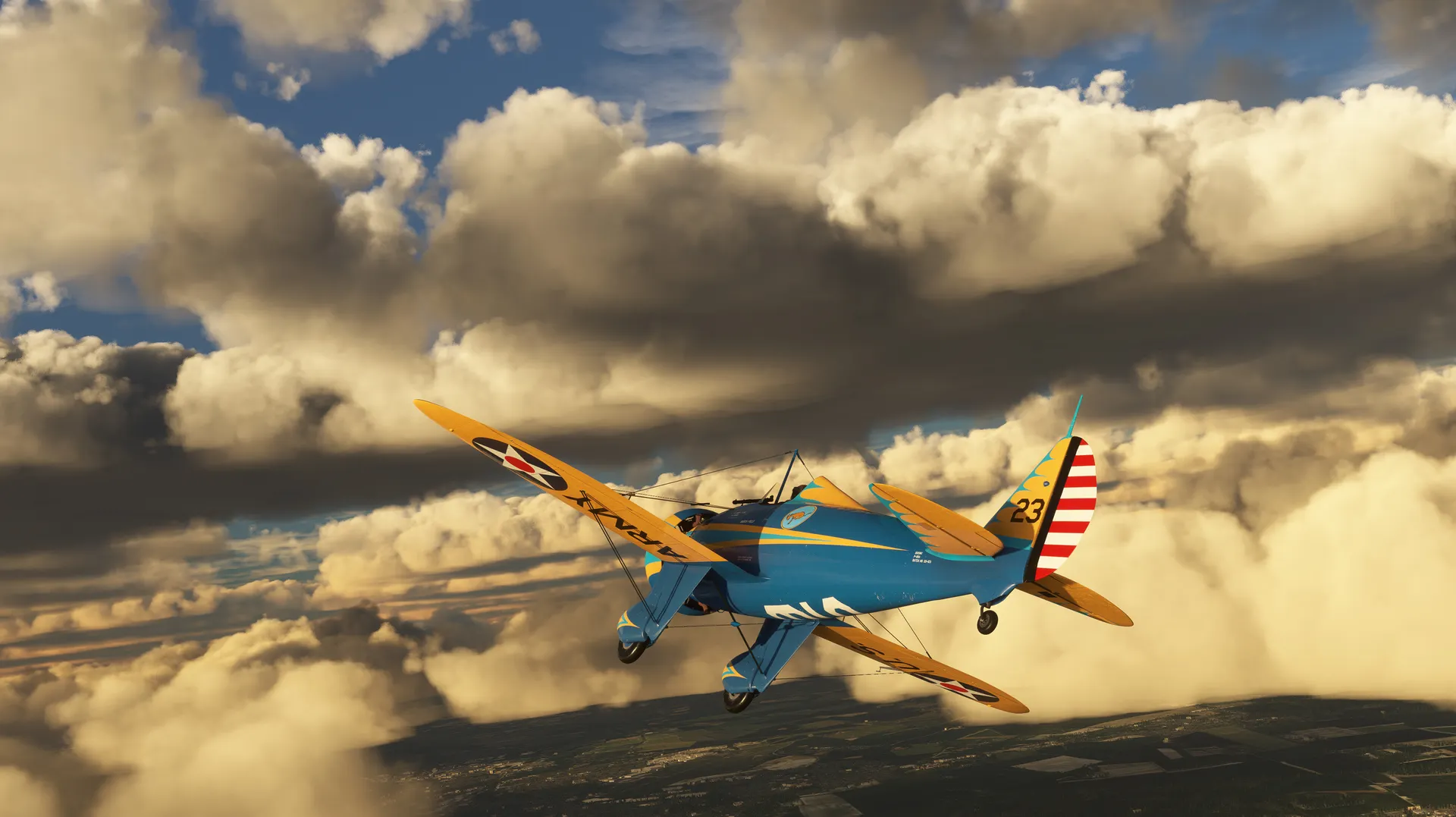
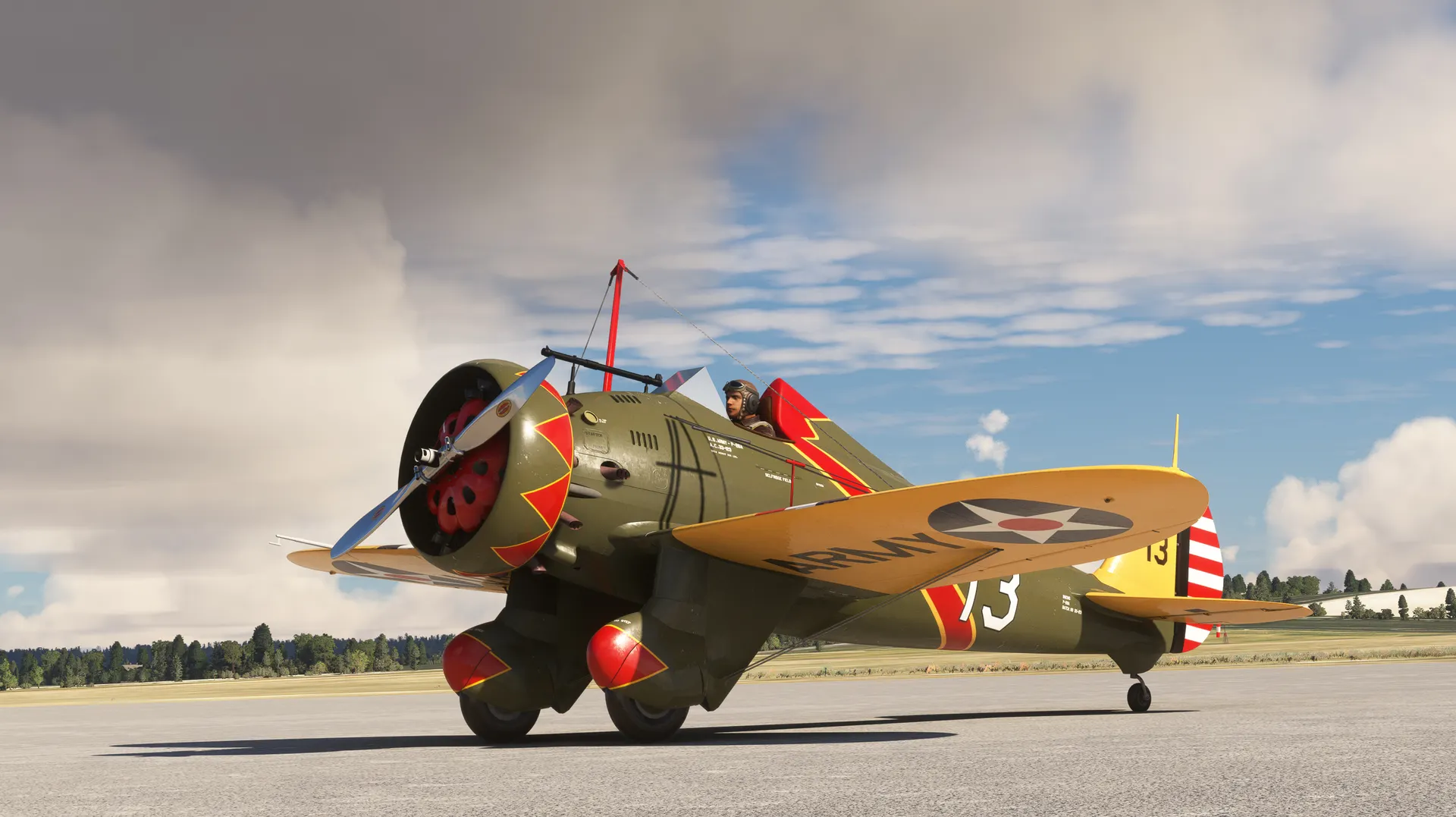
The P-26 is a single-engine, single-seat, low-wing military combat monoplane developed and manufactured by American aviation company Boeing. The aircraft is renowned as a pioneer as it was the first American all-metal fighter and the first pursuit monoplane to enter service with the United States Army Air Corps. It took its maiden flight in 1932 and saw combat in the 1930s and 1940s.

Boeing began developing the airframe in 1931 in concert with the U.S. Army Air Corps (which would become the U.S. Army Air Forces in 1941, which in turn would become the U.S. Air Force in 1947). Designated the Model 248 by Boeing, the prototype aircraft featured a low-mounted, cable-braced main wing and an open cockpit. It was powered by a 9-cylinder radial aircraft piston engine, had a standard tail unit, and had a fixed standard undercarriage. The Model 248 took its maiden flight on March 20, 1932, and Boeing manufactured just under 150 airframes by the time production ended in 1936.

The U.S. Army Air corps designated the aircraft the P-26, “P” for pursuit, as fighters were designated pursuit aircraft at the time. It earned the nickname “Peashooter” due to the long, cylindrical gunsight mounted on the top of the fuselage that resembled a toy blowgun. The P-26 was armed with two 7.62mm Browning machine guns and could carry two 100-pound bombs. Boeing began delivering the P-26 to the U.S. Army Air Corps in 1933 and would supply the airframe to several other countries, including China and the Philippines.

The P-26 saw combat in 1937 when Chinese nationalists flying the aircraft downed several Japanese medium bombers. The pilots also engaged in the first dog fights by all-metal aircraft when they took on Mitsubishi A5M fighters. The P-26 also proved worthy in the Philippines, downing several Mitsubishi A6M Zeros and Mitsubishi G4M medium bombers. Due to the rapid advances of aviation technology at the time, the P-26 became obsolete by the start of World War II, but continued to serve the United States as a trainer. Today, only one flyable example exists, owned by the Planes of Fame Museum in California. An original non-flying example is on display at the Smithsonian’s Air & Space Museum.

The P-26 measures 23 feet, 7 inches in length, stands 10 feet in height, and has a wingspan of 28 feet. It is powered by a 9-cylinder Pratt & Whitney R-1340-27 Wasp radial piston engine that delivers up to 600 horsepower and turns a 2-blade metal fixed-pitch propeller. It has a maximum range of 635 miles, a service ceiling of 27,400 feet above sea level, a climb rate of 720 feet per minute, and a maximum speed of 234 miles per hour

Specifications


WINGSPAN28ft (8.5m)
WING AREA250 sq.ft. (23 sq.m.)
LENGTH26ft. 7ins. (7.19m)
ENGINEPratt&Whitney R-1340-27 WASP 9-cylinder developing 600hp
EMPTY WEIGHT2,196lb (996kg)
MAX WEIGHT3,360lb (1,524kg)
MAX SPEED234mph (359 kmh)
RANGE369 miles (580km)
SERVICE CEILING27,400ft. (8,400m)