MSFS 2024 Status:
Investigating Marketplace
Support the site - donate!

B-52H

GKS

B52BOEINGBUFF

4/5 (50)


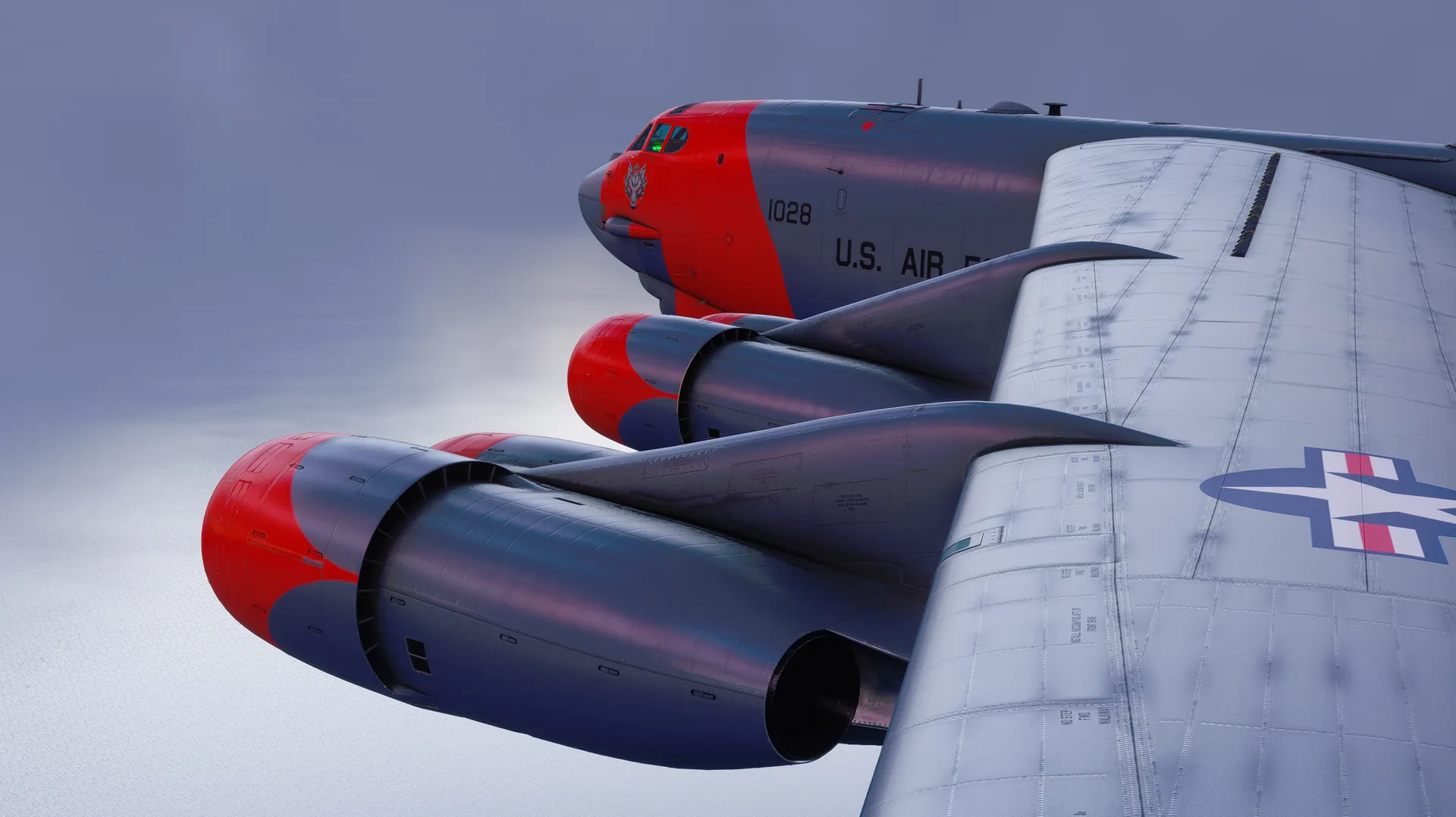
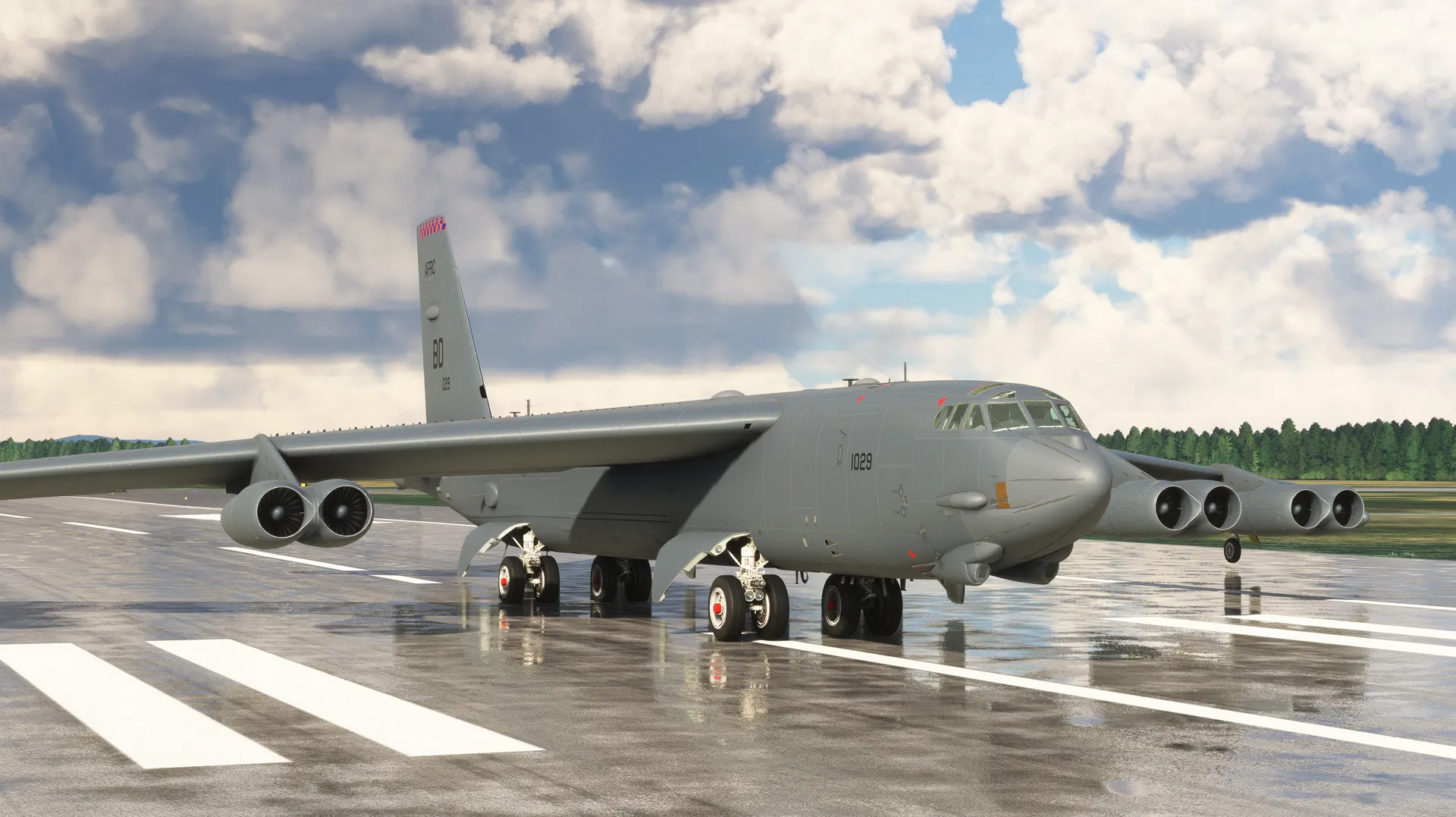
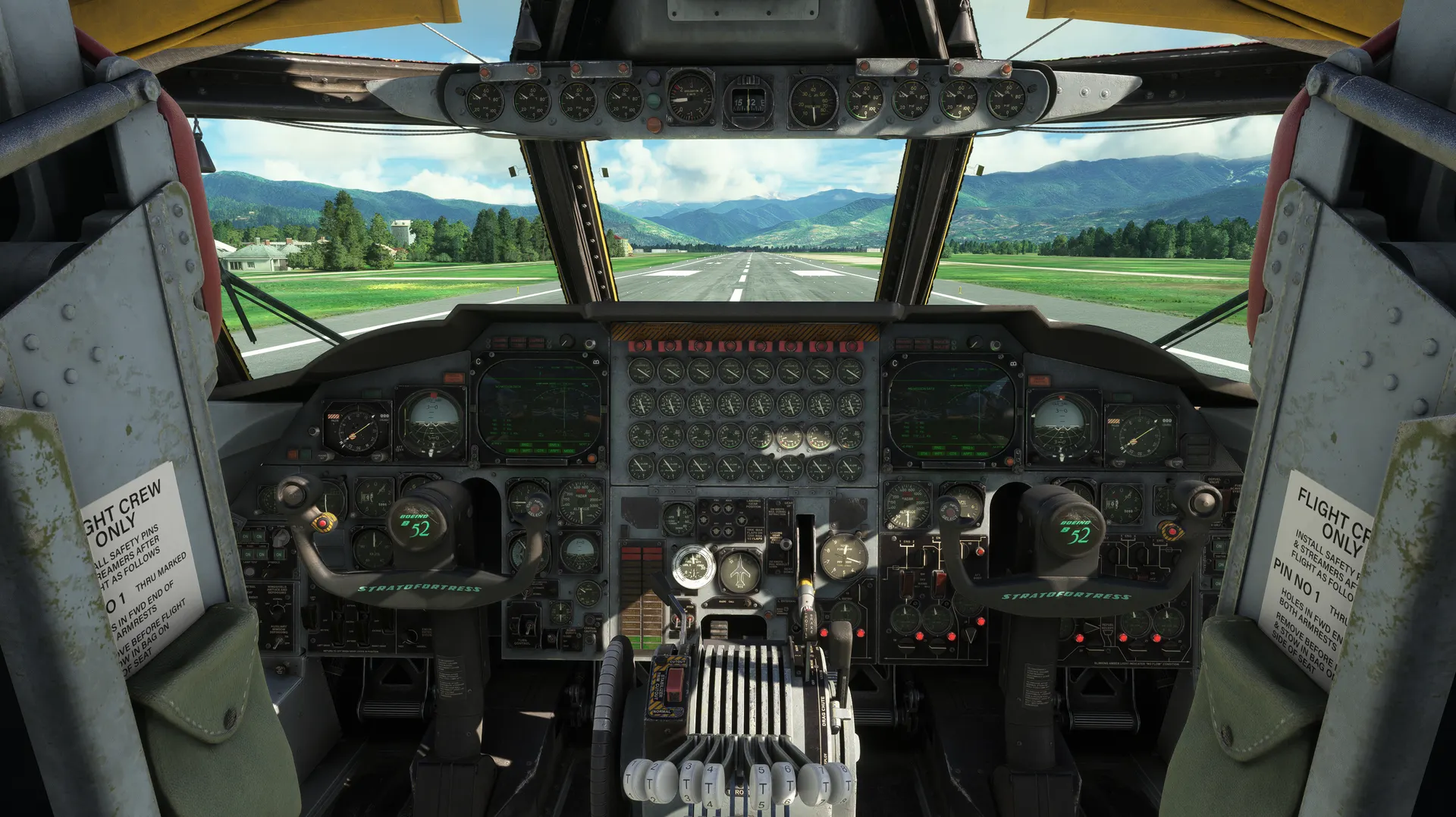
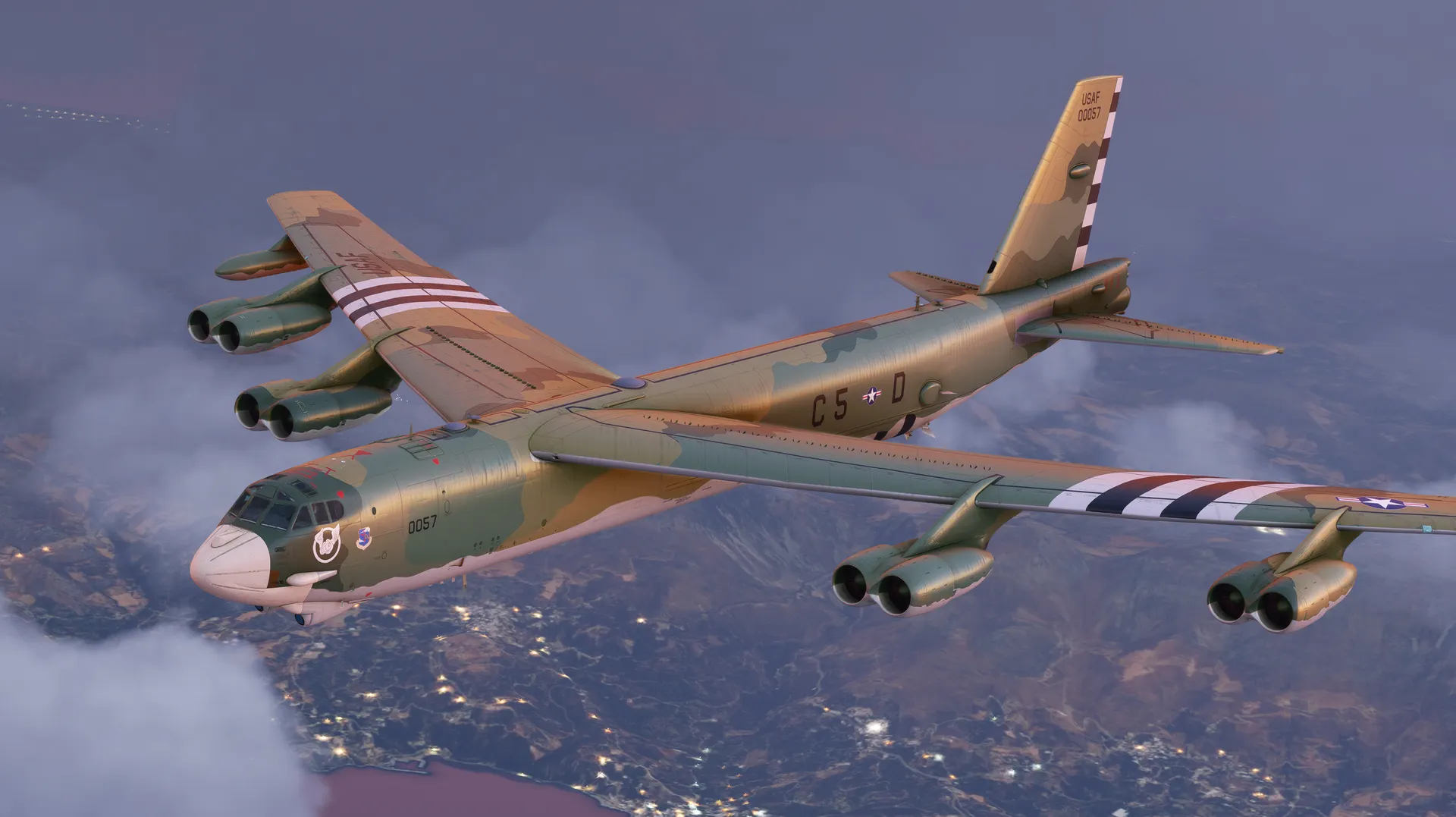
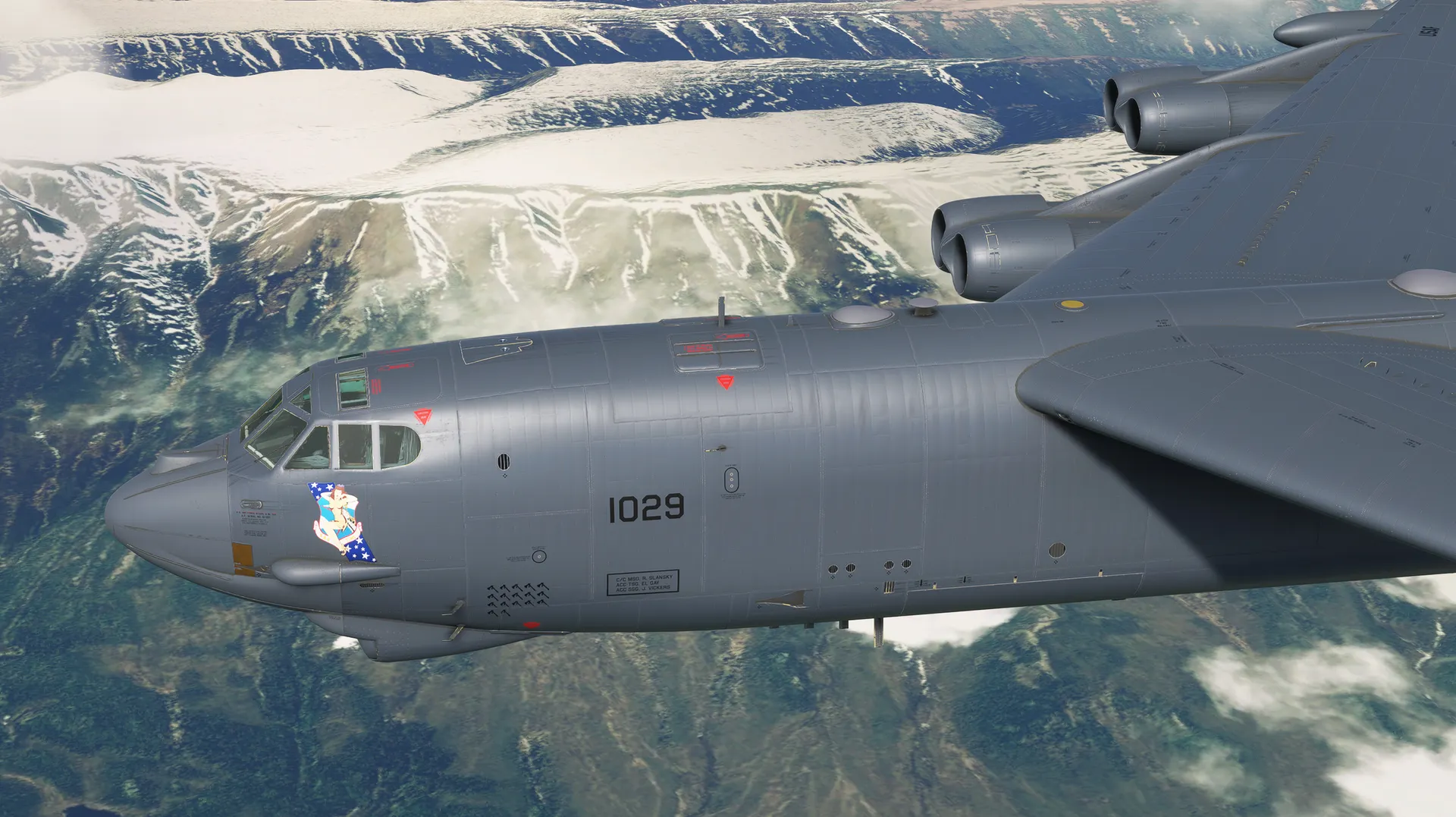
Despite its nickname "BUFF" (Big Ugly Fat Fellow) the B-52H remains a true legend among aircraft. Renowned for its outstanding reliability, range, and versatility, it continues to demonstrate exceptional performance even decades after its first flight. The B-52H represents the pinnacle of engineering mastery, combining power, endurance, and functional simplicity, making it one of the most respected and recognizable airplanes in aviation history.

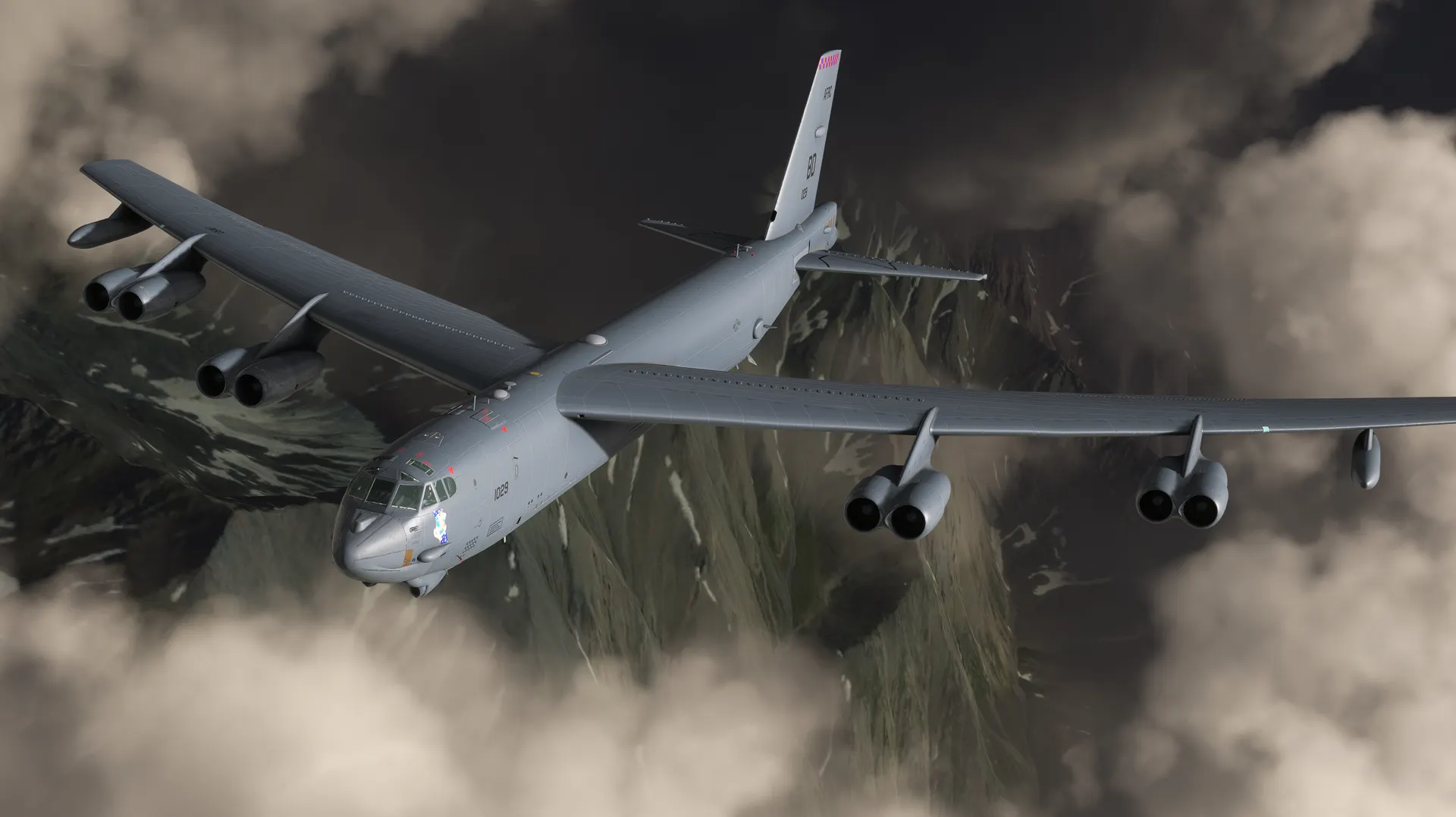
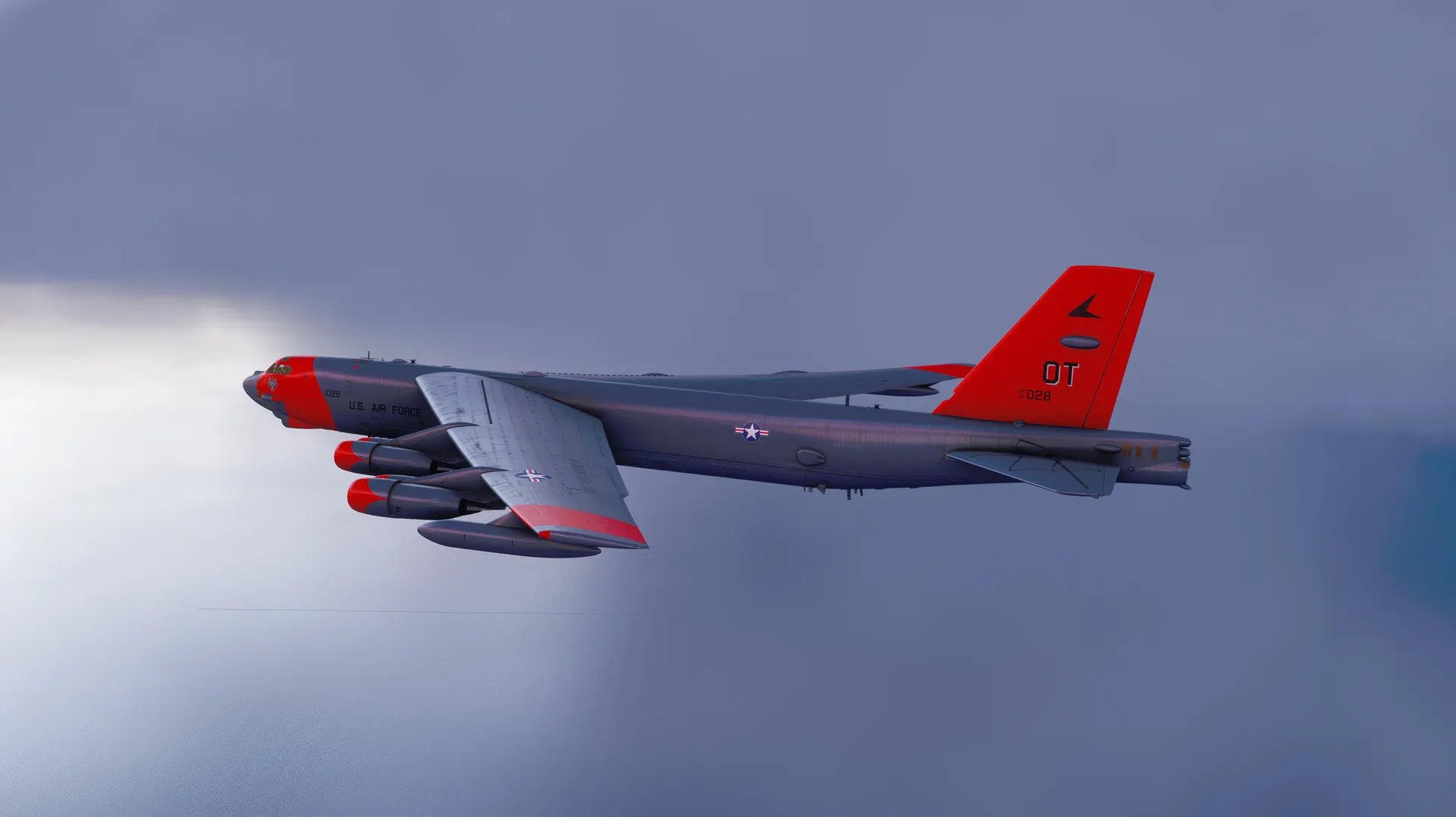
The B-52H Stratofortress is an American 8-engine strategic bomber developed and manufactured by American aerospace / defense company Boeing and operated exclusively by the United States Air Force. The jet, the prototype of which took its maiden flight on April 15, 1952, has proven to be one of the most enduring aircraft in aviation history. Introduced in 1955, the B-52 has operated continuously for nearly 70 years, and with planned upgrades, the Stratofortress will likely see a century of flight. The B-52H is the current variant of the aircraft and has been in service since 1961. A total of 72 of the H model remain in service.

The B-52 evolved out of the strategic outlook of the United States in the wake of World War II with the advent of nuclear weapons. The Air Force’s Strategic Air Command needed a platform that could deliver a devastating blow to an enemy target thousands of miles distant. A number of initial concepts emerged, but the aircraft that would become a legend arrived after a flurry of last-minute design work. The B-52’s form resembled that of Boeing’s recently fielded B-47 Stratojet, a 6-engine, swept-wing, high-altitude long-range bomber. The larger B-52 could carry nearly three times the payload of the Stratojet, more than four times its range.

Operationally, the B-52 has proven a champion of versatility. It initially flew “alert” missions, loaded with live nuclear weapon ready to attack targets within the Soviet Union. It was later adapted to deliver large numbers of conventional gravity (unguided) bombs, cruise missiles, and other munitions, including air-dropped mines. It was then adapted to carry precision guided munitions, including GPS-assisted bombs and laser guided bombs. The United States employed the B-52H heavily during the Vietnam War and during the Gulf War. It was also used in Afghanistan during Operation Enduring Freedom. Apart from its prowess as a high-altitude, long-range bomber, the B-52H has proven to be a highly capable low-altitude penetration aircraft that can “hug” terrain.

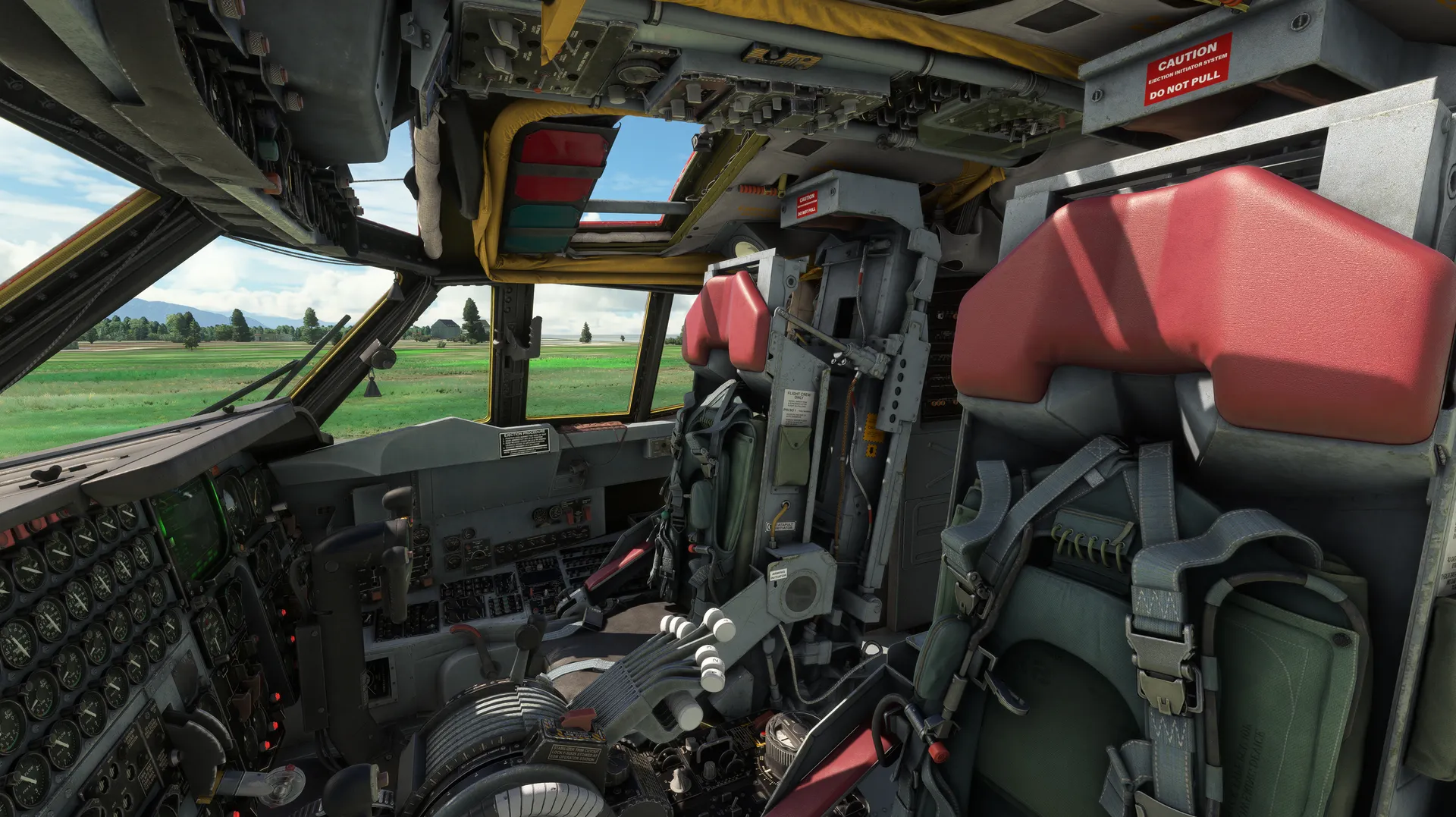
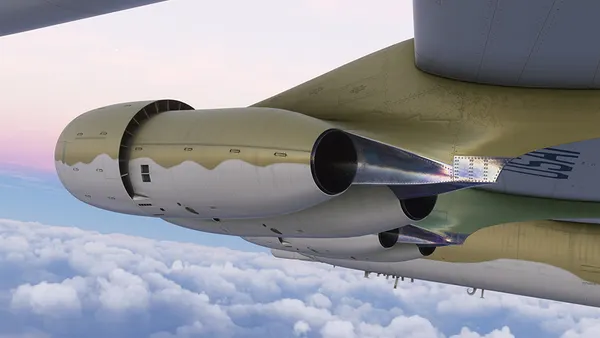
The B-52H is piloted by two and has a total crew of five. It stands 40 feet, 8 inches tall, measures 159 feet, 4 inches in length, and has a wingspan of 185 feet. The wing is highly swept and comprises distinctive, large flaps for take-off and landing. It is powered by eight wing-mounted Pratt & Whitney TF33 turbofan engines that each produce up to 17,000 pounds of thrust. The engines are mounted in four pods, two engines per pod, with each pod mounted beneath the main wing. The B-52H has a maximum range of 10,000 miles (extendable through in-flight refueling), a service ceiling of 50,000 feet above sea level, and a climb rate of 6,270 feet per minute. It cruises at 509 miles per hour and it has a top speed of 650 mph.
VERSION 1.1.1 RELEASED DECEMBER 1, 2025

NEW FEATURES

  1. CG/FLAS Instrument Added A new in-flight weight & balance instrument that allows the crew to monitor aircraft center of gravity and total weight dynamically during flight.

  2. New Engine Smoke & Dust Effects Completely reworked engine smoke and ground dust effects both on the ground and in the air for enhanced realism.

  3. Taxi Checklist Added A complete interactive taxi checklist is now included.

  4. Option to Hide the Glareshield Options Icon The options icon on the glareshield can now be toggled on/off.

  5. Added function to Beacon Marker indicator.

IMPROVEMENTS

  1. Flight Model Update

    a. Engine Thrust vs Drag Rebalanced Engine thrust at low altitudes (especially without external stores) has been corrected to eliminate excessive acceleration. b. Correct AoA Buffet Data Implemented The aircraft now fully reflects real-world stall/buffet behavior at critical angles of attack, limiting climb performance according to the actual flight manual. c. Correct Flap Lift Characteristics Takeoff roll and liftoff behavior at full flap settings now match real performance tables from the manual. d. Updated CG & Fuel Tank Mass Distribution Center of gravity and fuel mass distribution have been refined. Aircraft balance now changes more noticeably as fuel burns, requiring proper fuel-system management in flight.

  2. Autopilot Improvement: Auto-Leveling Transition When switching from non-steering modes to navigation modes, the autopilot now automatically levels pitch and roll. Previously, switching modes with high bank angles could cause sudden pitch spikes (nose-up or nose-down). This transition is now smooth and stable.

  3. Pneumatic Engine Start Improvements A new bleed-air distribution formula has been implemented. Starting engines via pneumatic start or cross-bleed now requires strict adherence to the checklist and proper fuel-system configuration.

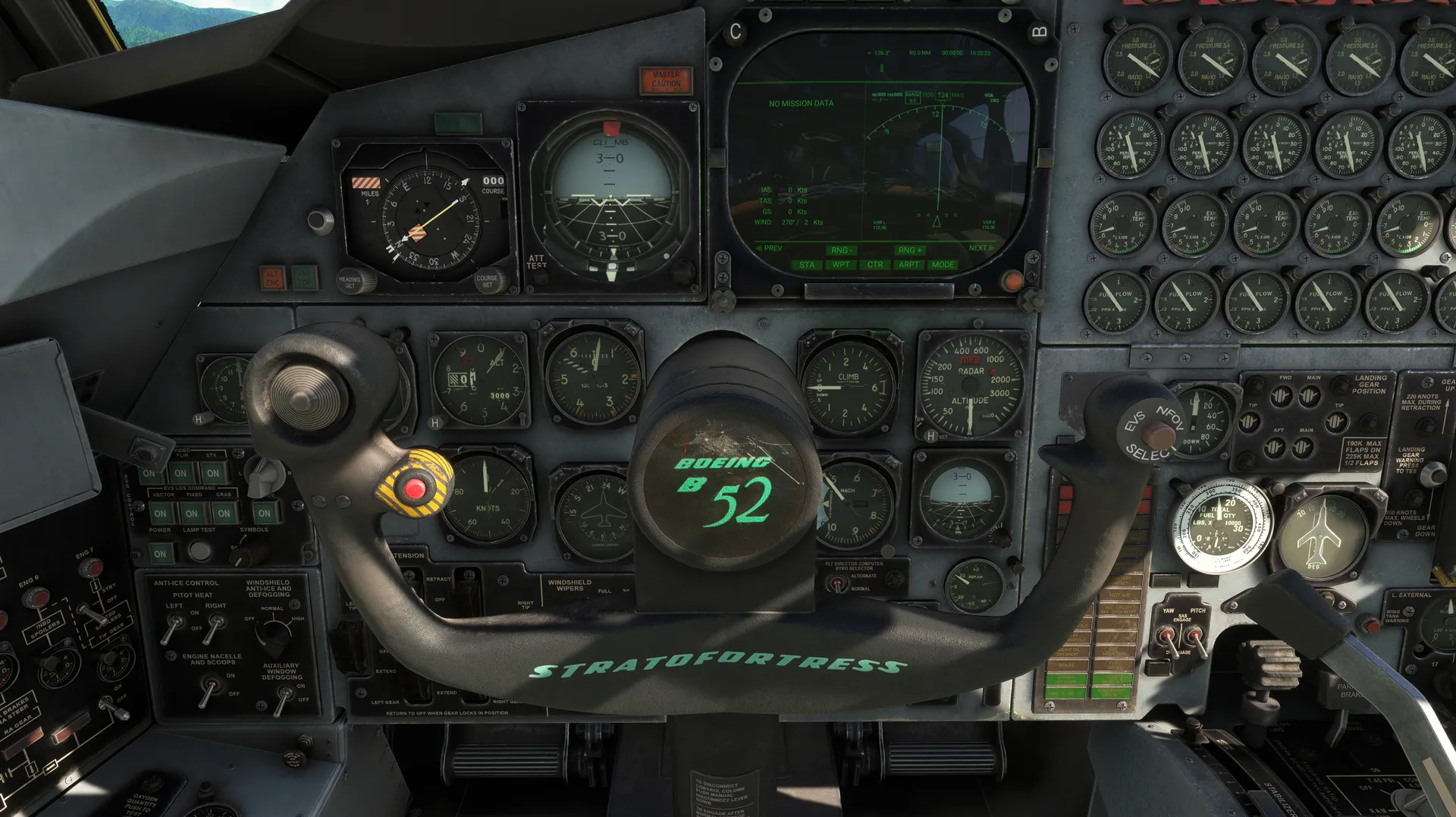
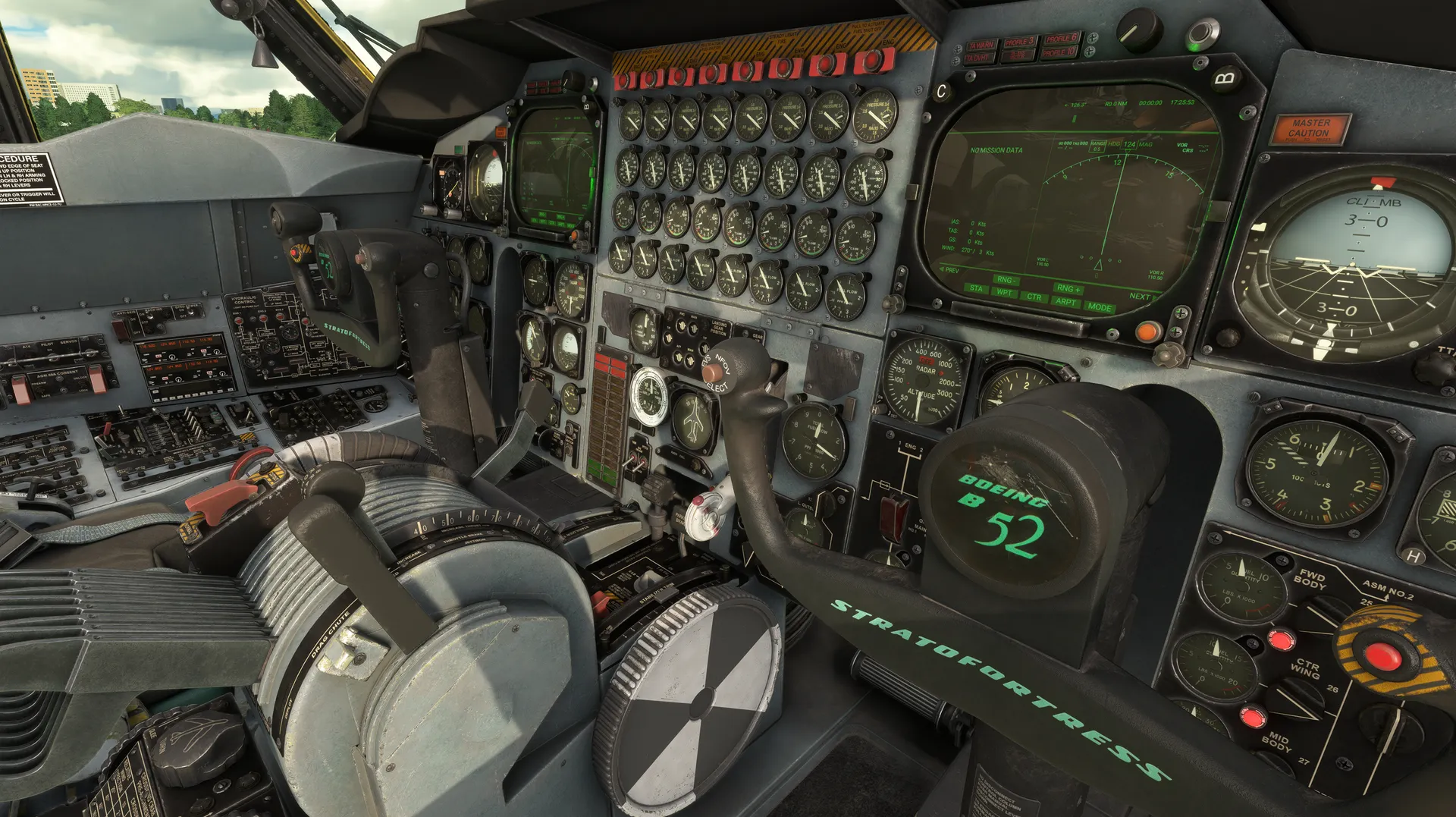
  4. MFD Map View Logic Updated Navigation modes on the MFD now switch automatically according to the position of the navigation knob.

  5. Added the ability to enable autopilot altitude hold mode via a hotkey

Bug Fixes

  1. Fuel Flow Logic Corrected Fuel consumption formulas across altitude and speed regimes now match the real aircraft performance tables.

  2. EVS Electrical System Configuration Fixed

  3. ICAO Designator Corrected

  4. COM1 Frequency Input Bug Fixed Decimal frequency input behavior corrected.

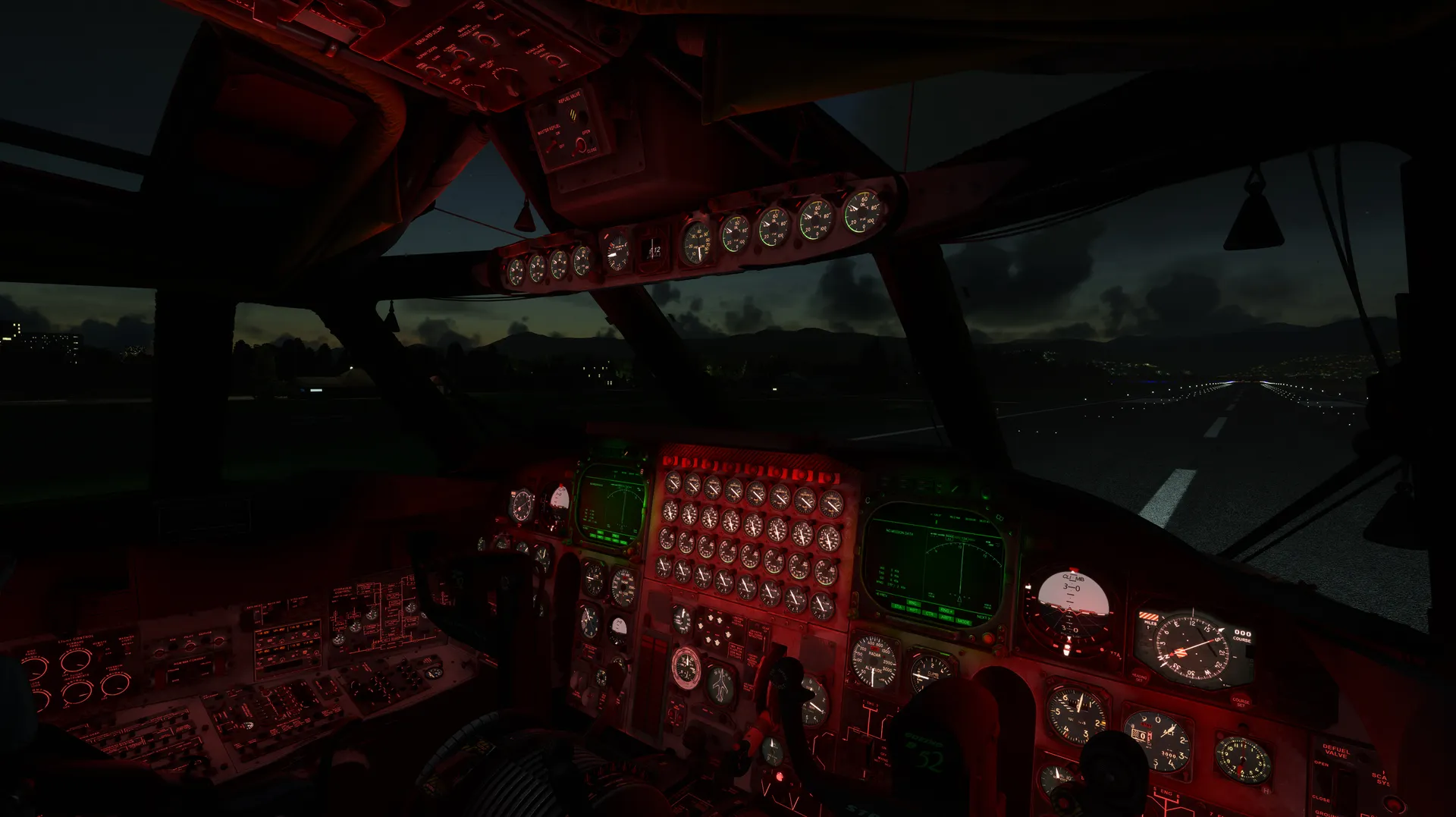
  5. Fixed cockpit night lighting

VERSION 0.1.1 RELEASED OCTOBER 16, 2025

Pre-release version

VERSION 0.2.1 RELEASED JANUARY 1, 0

Pre-release version2

VERSION 0.3.1 RELEASED OCTOBER 24, 2025

Release Candidate

VERSION 1.0.2 RELEASED OCTOBER 27, 2025

Release version

VERSION 1.0.4 RELEASED NOVEMBER 3, 2025