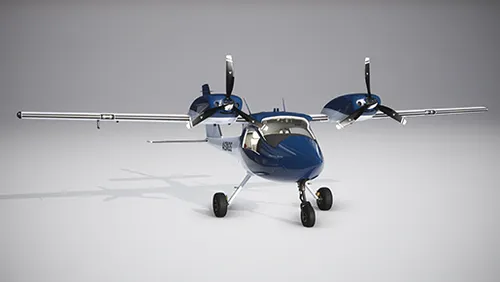
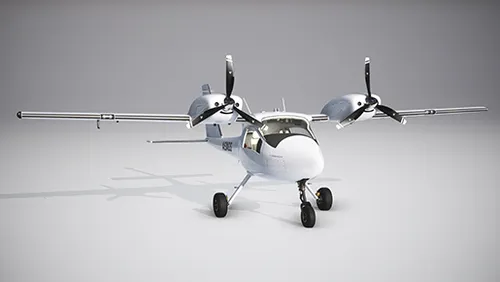
Daedalus BS214
Arantis Simulations
GA GENERAL AVIATIONLIGHT TWIN ENGINEHIGH WINGS BUSH STOLANTI ICE FIKIGLASS COCKPIT G3X GTN750- USD 19.99
- View more offers at FS Addon Compare
- Added: March 5, 2026
- Updated: October 21, 2026
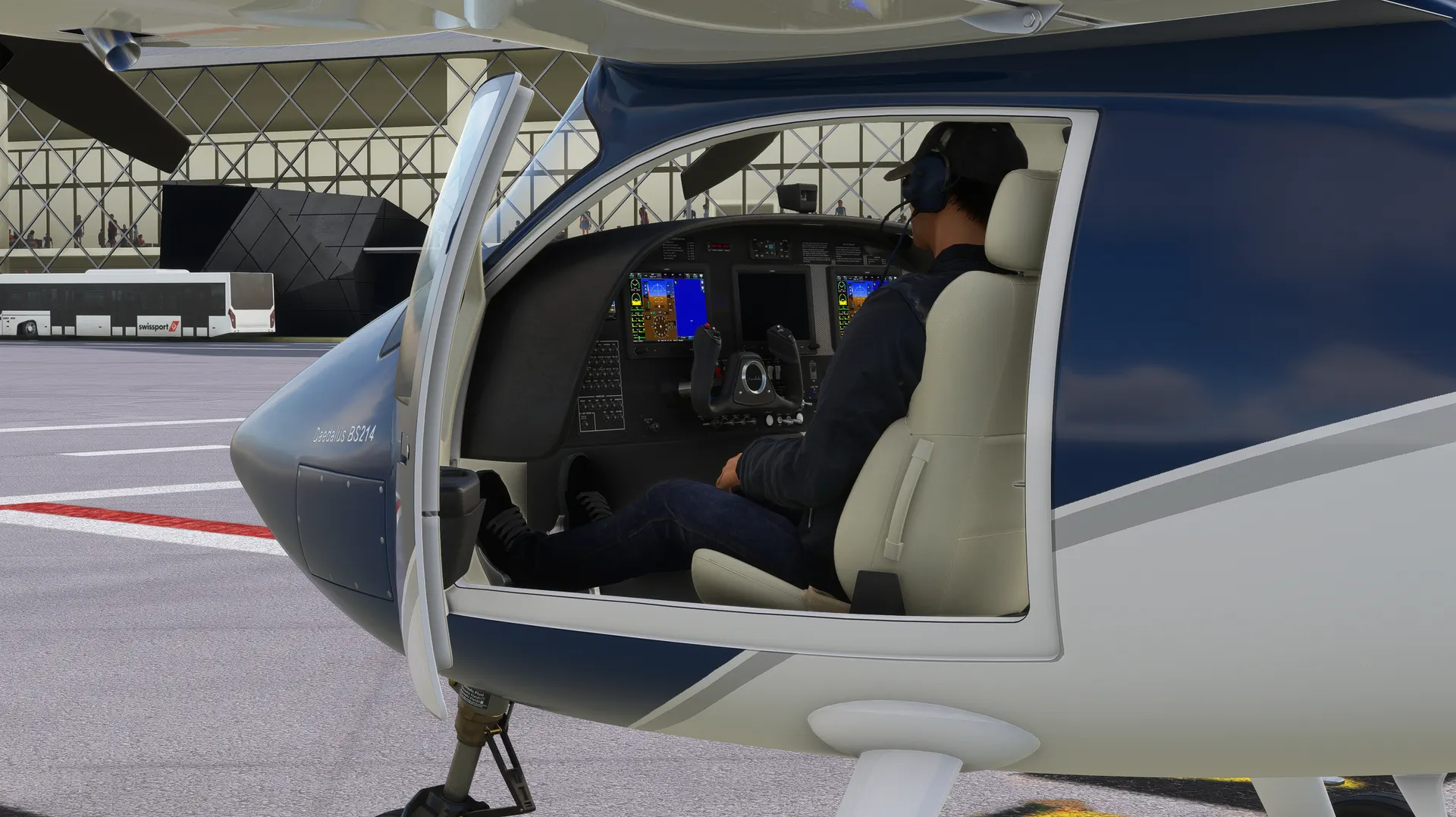
The Daedalus BS214 is a prototype experimental twin-engine aircraft. It features a tricycle high-wing design and accommodates two seats, boasting Bush STOL capabilities.
The aircraft was named in honor of Daedalus, the famous ancient Greek architect and engineer who, according to Greek mythology, was the first man who build wings that he and his son Icarus used to escape from Crete. Icarus was the first man flew in the sky.
The aircraft requires just 100 meters of ground roll for takeoff and landing. It is powered by two Rotax 915iS engines, each producing 141 hp. These engines deliver excellent performance during cruising and particularly in climb rates. The right engine rotates counterclockwise, meaning the aircraft has no critical engine. Controlling the aircraft in the event of an engine failure (whether left or right) is straightforward. The aircraft is capable of flying in FIKI (Flight Into Known Icing) conditions, thanks to its anti-ice protection system. The windshield, propellers, and leading edges of the wings and the tail are electrically heated to prevent ice buildup. A third external 70V 70A alternator, installed on the right engine, powers the (LPED) heated leading edges. The Pitot tube and stall horn are also electrically heated. The cockpit is designed for comfort, measuring 1.35 meters in width and 1.15 meters in height, making it spacious for both the pilot and co-pilot. An automatic A/C climate control system, installed on the left engine, ensures a comfortable and pleasant environment in all weather conditions. The large windshield, along with side and rear windows, provides excellent visibility. The design of the aircraft prioritizes safety, performance, comfort, and ergonomics.
The Daedalus BS214 was designed and built using NASA's OpenVSP software (airfoils, fuselage, tail, empennage, dimensions, CFD, lift polar, drag polar, etc.). Real-world data and formulas were employed to calculate all necessary specifications, such as weight, surface areas, dimensions etc.
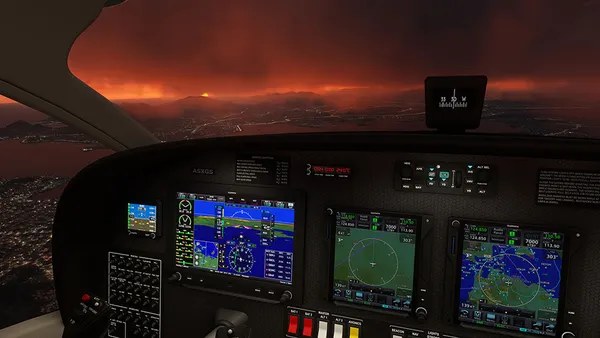
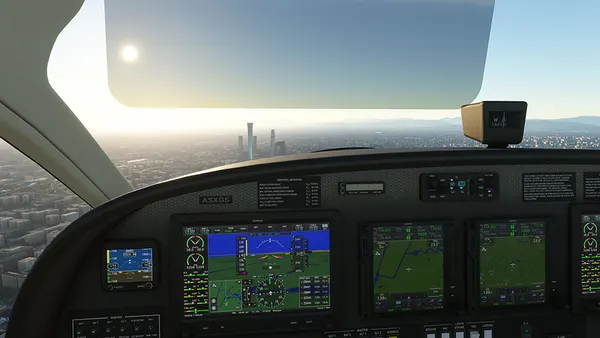
For the best experience, it is recommended to fly it in VR, if possible.
KEY FEATURES 3D MODEL
- 3D model matching the flight model
- Modern Propeller Model implementing propeller lift and drag
- Physically Based Rendering (PBR) materials for a perfect visual result
- Highly detailed textures for special clarity including decals
- Numerous animations, including: - Aircraft doors - Landing gear flex - All cockpit switches, buttons, knobs and circuit breakers - Fully animated seats (useful in VR) & armrest - Sunvisors
- Realistic backlighting and floodlighting
- Realistic exterior lighting
- Detailed checklist (non interactive, no preflight inspection)
- One livery in 5 colors (blue, red, green, yellow, white)
- Integration of native MSFS features such as icing and rain effects SYSTEMS
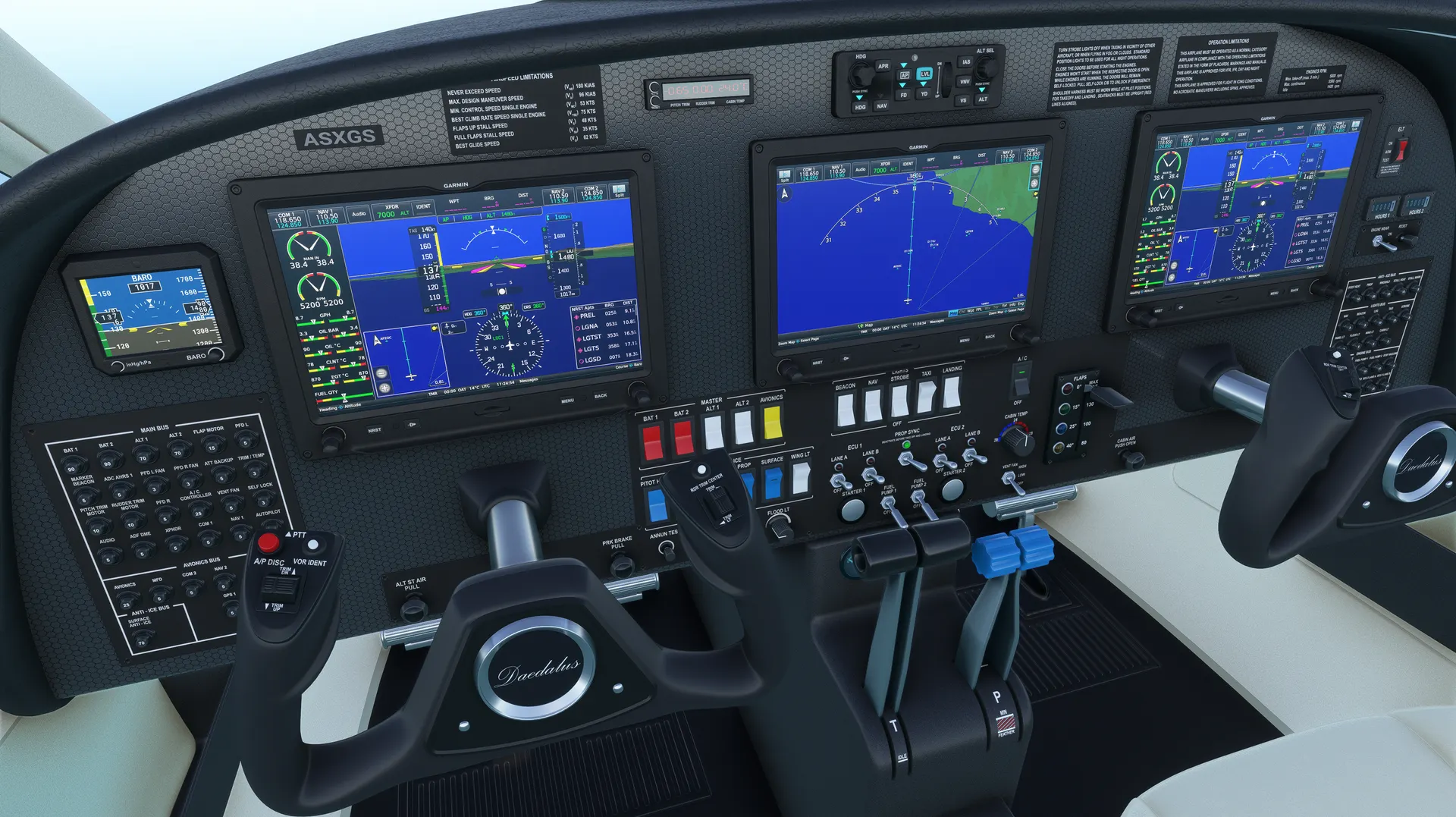
- G3X Touch Avionics by Working Title (PFD & MFD)
- Variants with PMS50-GTN750 or TDSSim-GTN750Xi VC integration (replacing the MFD) which require separately purchased and installed third-party software; without it, the GTN750 units will not appear.
- GMC307 autopilot with Yaw Damper
- Backup Attitude & Speed instrument
- Trim & Cabin temperature instrument
- Anti-Ice System
- Oxygen System
- Simulated circuit breakers
- Automatic A/C system & cabin temperature initialization
- Full PFD warning system
- Simulation of engine stress and damage due to exceedances of RPM or temperature limits (CHT, Coolant, and EGT)
- Airspeed indicator failure under specific conditions EFFECTS
- Exhaust heat & smoke effect
- Engine fire smoke effect MANUAL
- PDF detailed manual
- PDF hardware key bindings
Note: Please refer to the manual for detailed information on aircraft operation and engine limitations. Manual and changelog are included in the Documentation folder. Manual is also available online on the product page at www.justflight.com