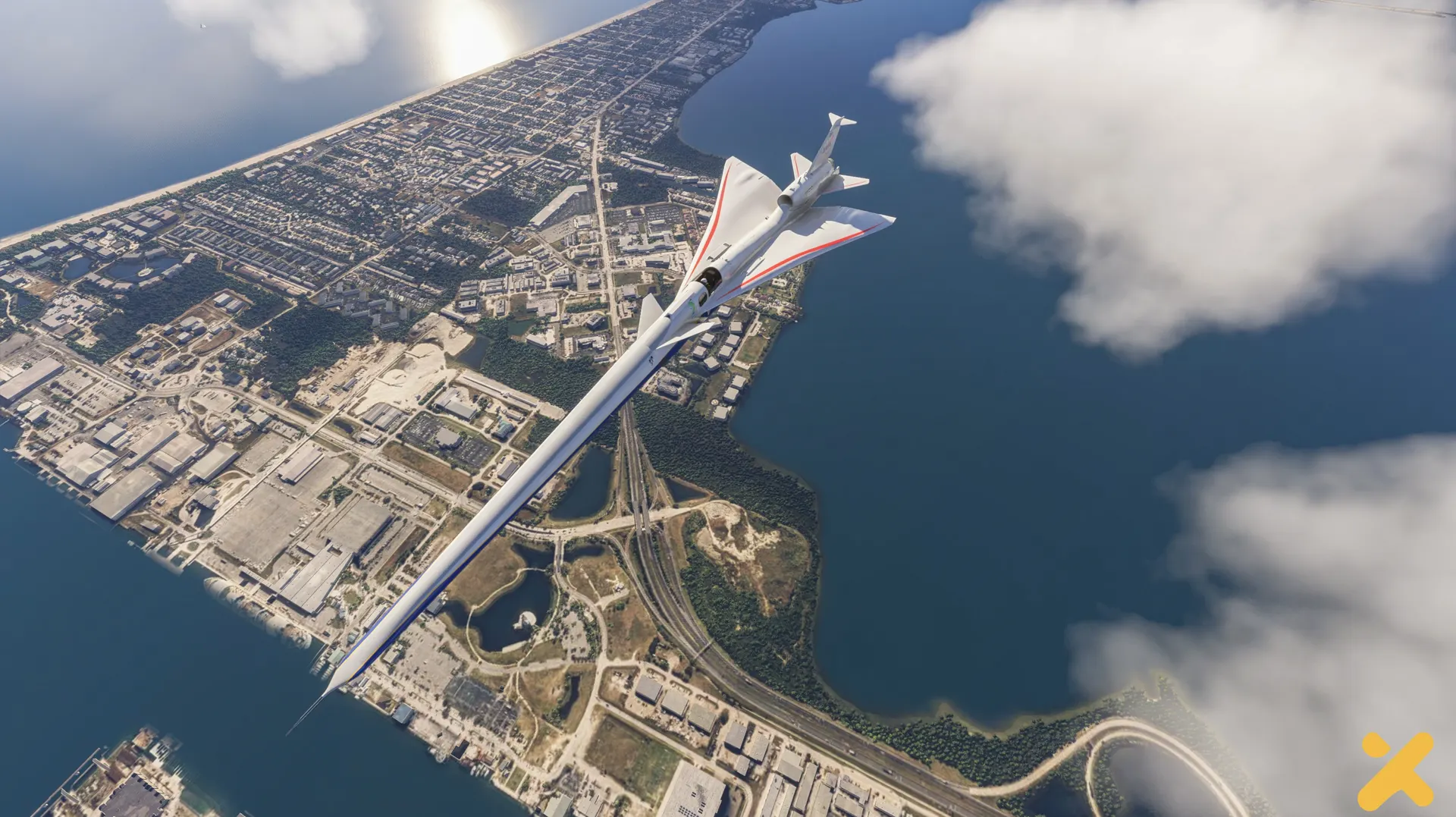
The NASA X-59A QueSST (Quiet SuperSonic Technology) is a single-engine, single-seat, experimental supersonic jet aircraft developed for the National Aeronautics and Space Administration (NASA). The one-of-a-kind aircraft was developed as a proof-of-concept platform for reducing the intensity of sonic booms as experienced on the planet’s surface and to study the details of supersonic shockwave genesis. It took its maiden flight in 2025, and the program has now transitioned into its flight test and experiment phase.
NASA announced the QueSST program in 2016 as part of its New Aviation Horizons campaign, an initiative conceived to develop a new series of experimental airplanes, or “X-planes,” to tackle ongoing aerospace challenges with next-generation technologies. The X-plane lineage originated in the late 1940s with NASA’s progenitor, the National Advisory Committee for Aeronautics (NACA), and the X-1. Developed by Bell Aircraft in concert with NACA with input by the U.S. Air Force, the rocket powered X-1 was the first piloted aircraft to surpass the speed of sound in level flight. Several X-planes followed, both human-piloted and unmanned. The X-59A was the first piloted X-plane to fly in 20 years when it took its maiden flight on October 28, 2025.
While offering the key benefit of shortening long-distance flight times, supersonic flight has stymied aviation engineers for several reasons. One of the most notable is the sonic boom that an aircraft creates when flying faster than Mach 1 (the speed of sound). When an aircraft flies at supersonic speeds, shockwaves form over distinct points and edges of the vehicle including the nose, leading edges of wings and stabilizers, jet intakes, even rivet heads. These shockwaves coalesce as they propagate away from the aircraft, forming a distinct cone, the profile of which resembles a V with the vertex at the nose of the aircraft. An observer will experience a sonic boom when the shockwave passes. The phenomenon caused the U.S. government’s Federal Aviation Administration to prohibit supersonic flight over land due to the disruptive (and sometimes destructive) effects of sonic boom-causing shockwaves to populated areas. Supersonic flight is similarly prohibited throughout terrestrial regions throughout the world.
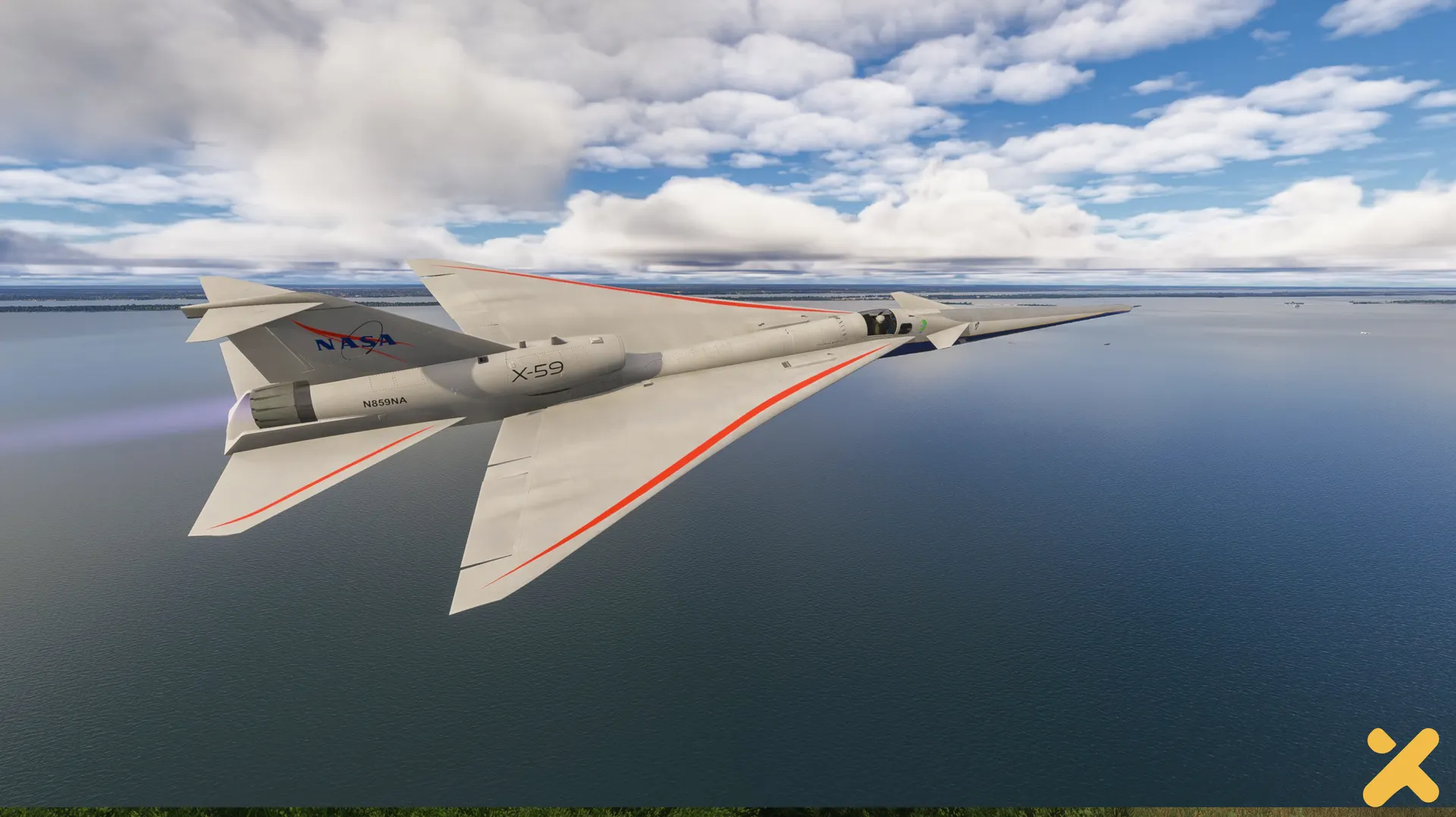
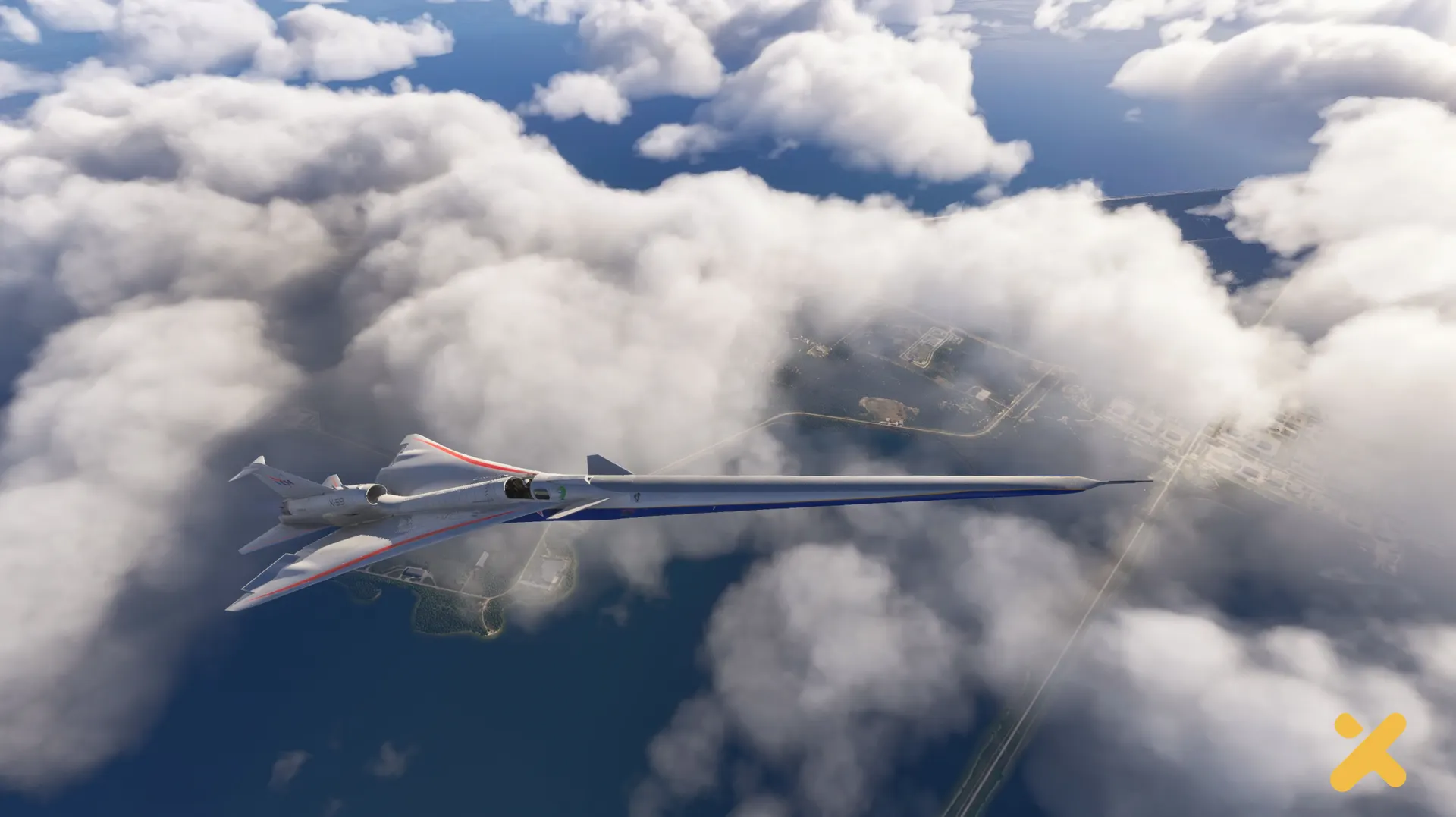
Engineers tackled the problem by developing an aircraft with a long, slender fuselage and steeply swept wings and tail surfaces. The form inhibits individual shockwaves from coalescing into a singular, powerful wavefront. Computational fluid dynamics and wind tunnel testing indicated that such a profile would cause a “thud” with an intensity of 75 perceived level decibels (PLdB), comparable to a car door closing from 20 feet distant, rather than a powerful boom many times more intense (typically 105+ PLdB).
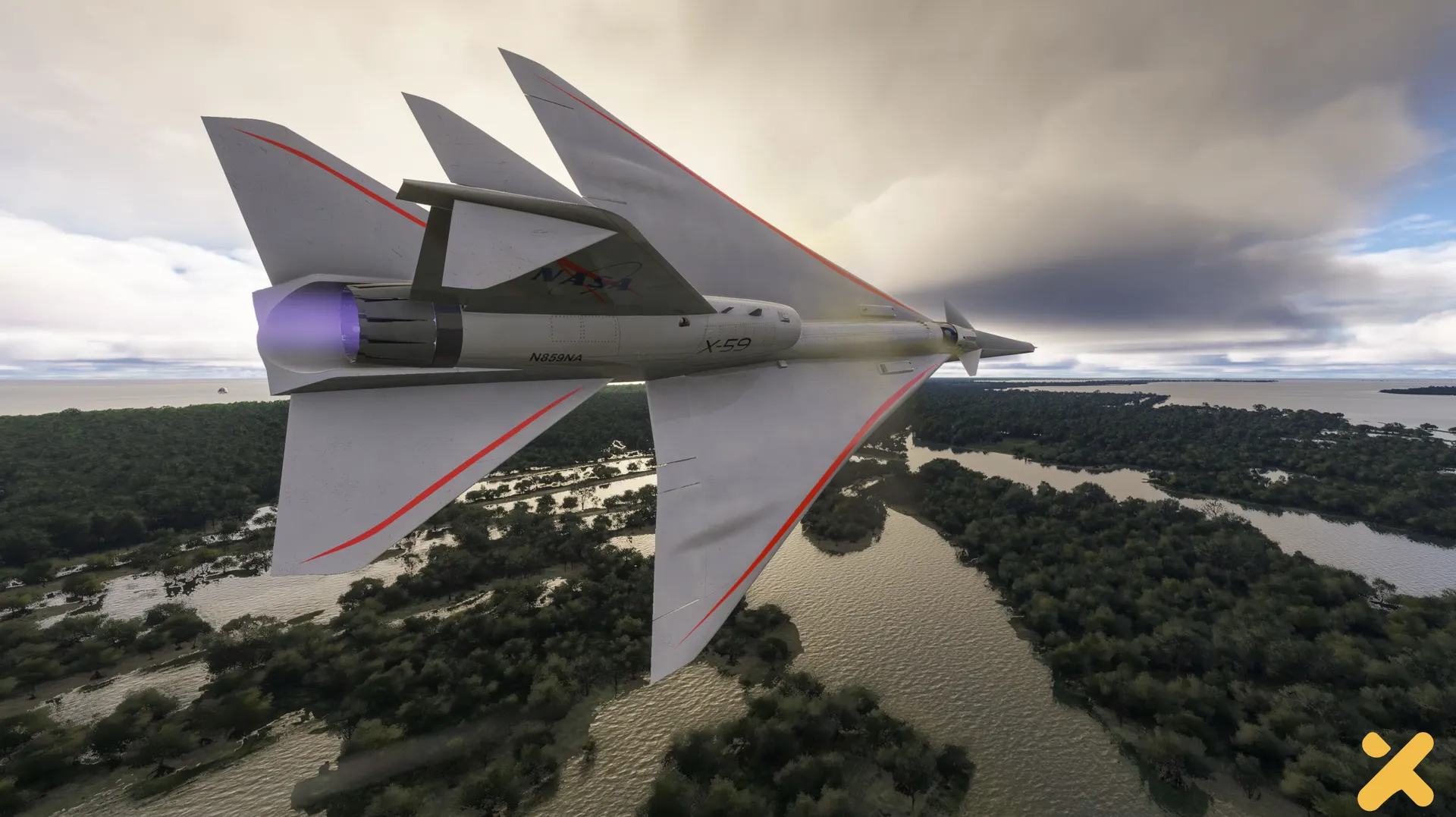
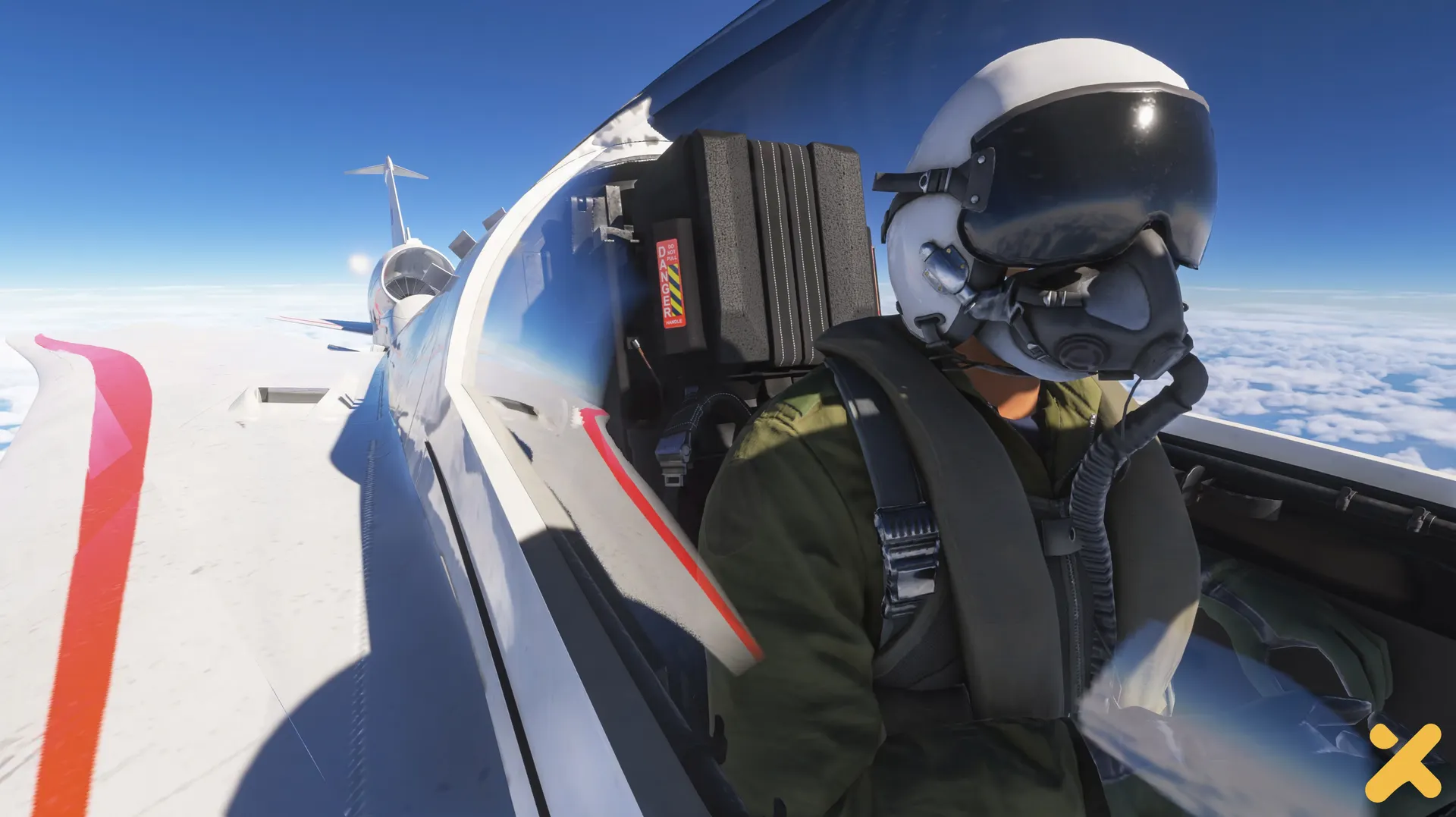
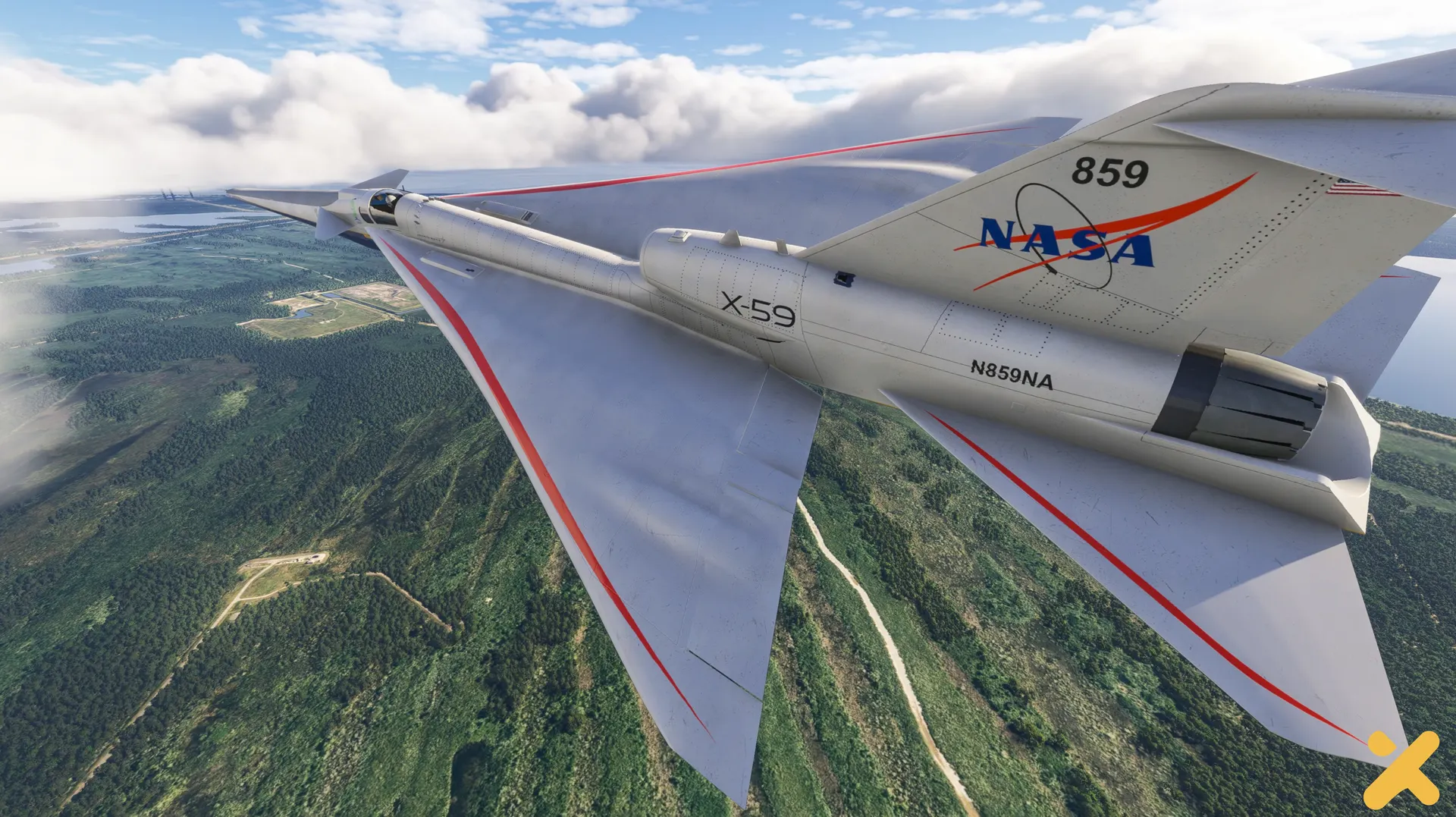
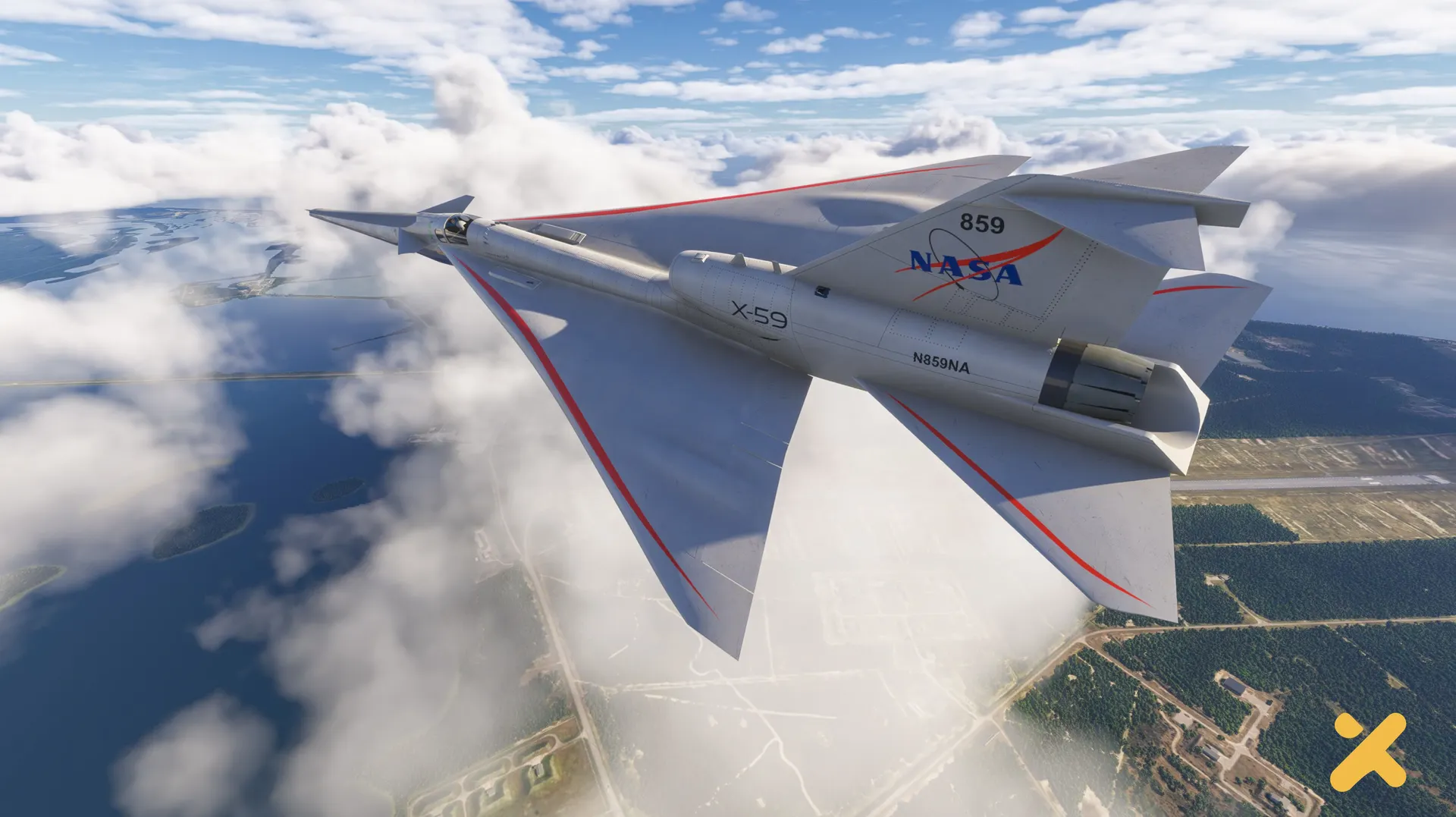
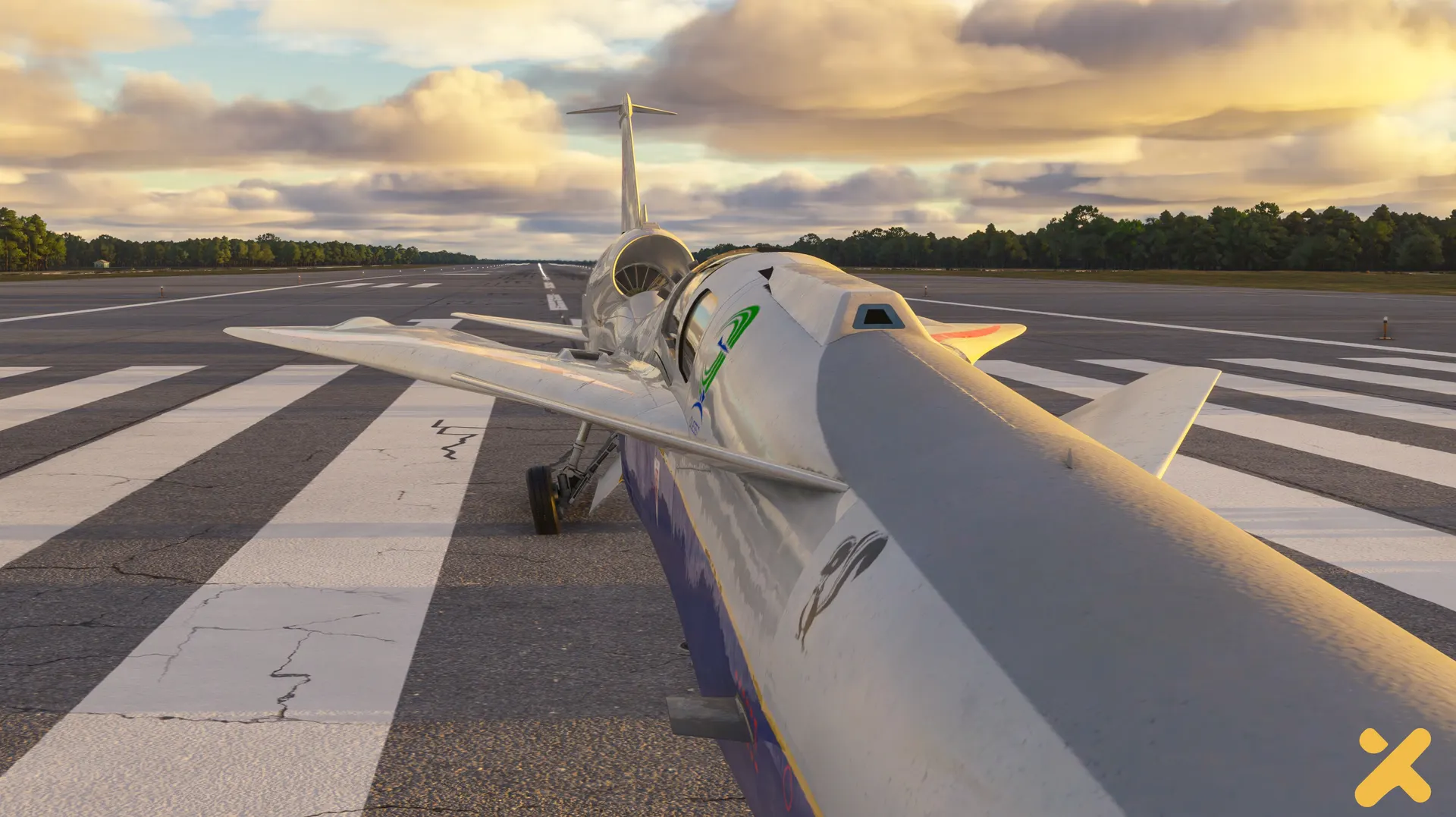
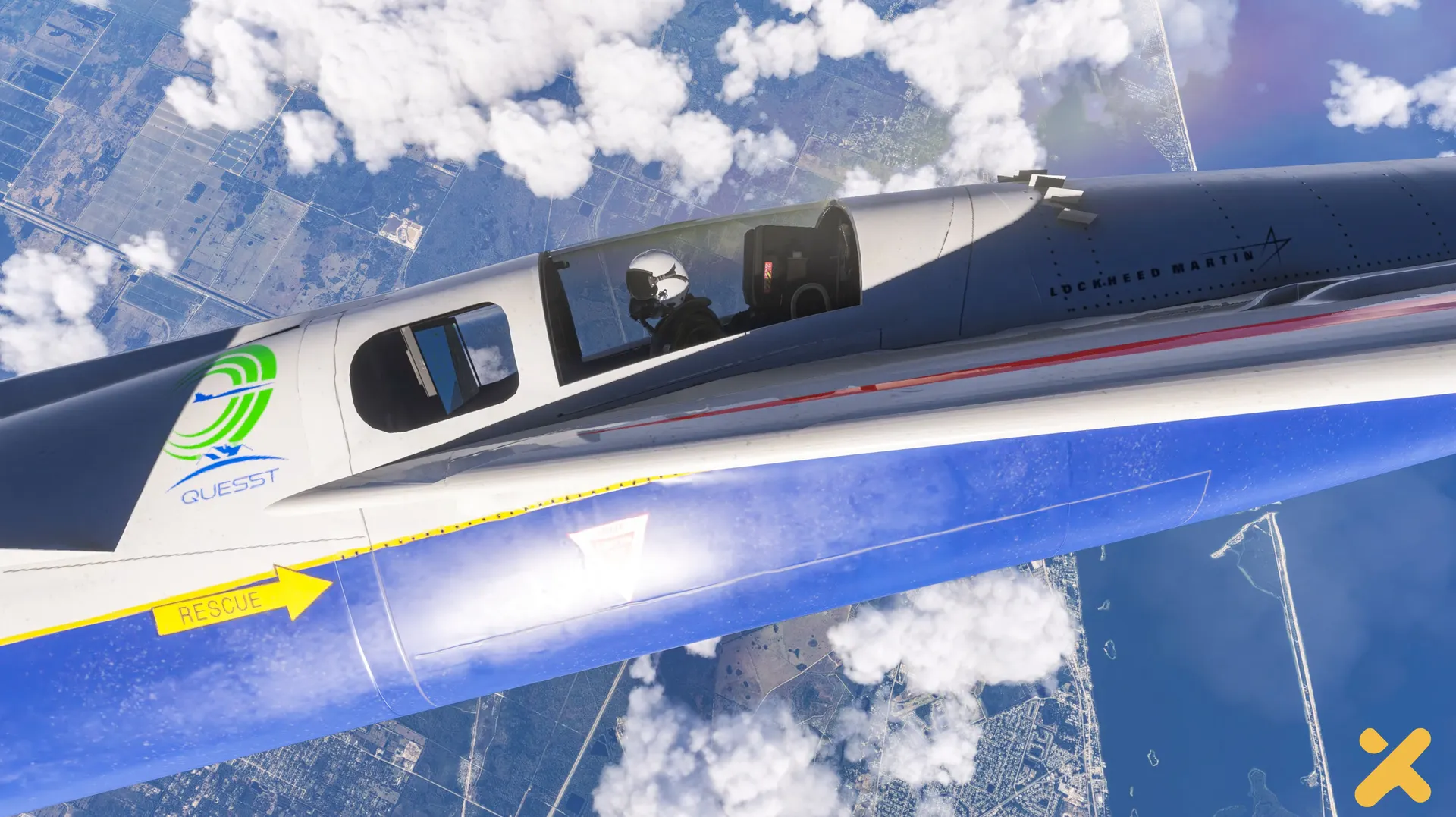
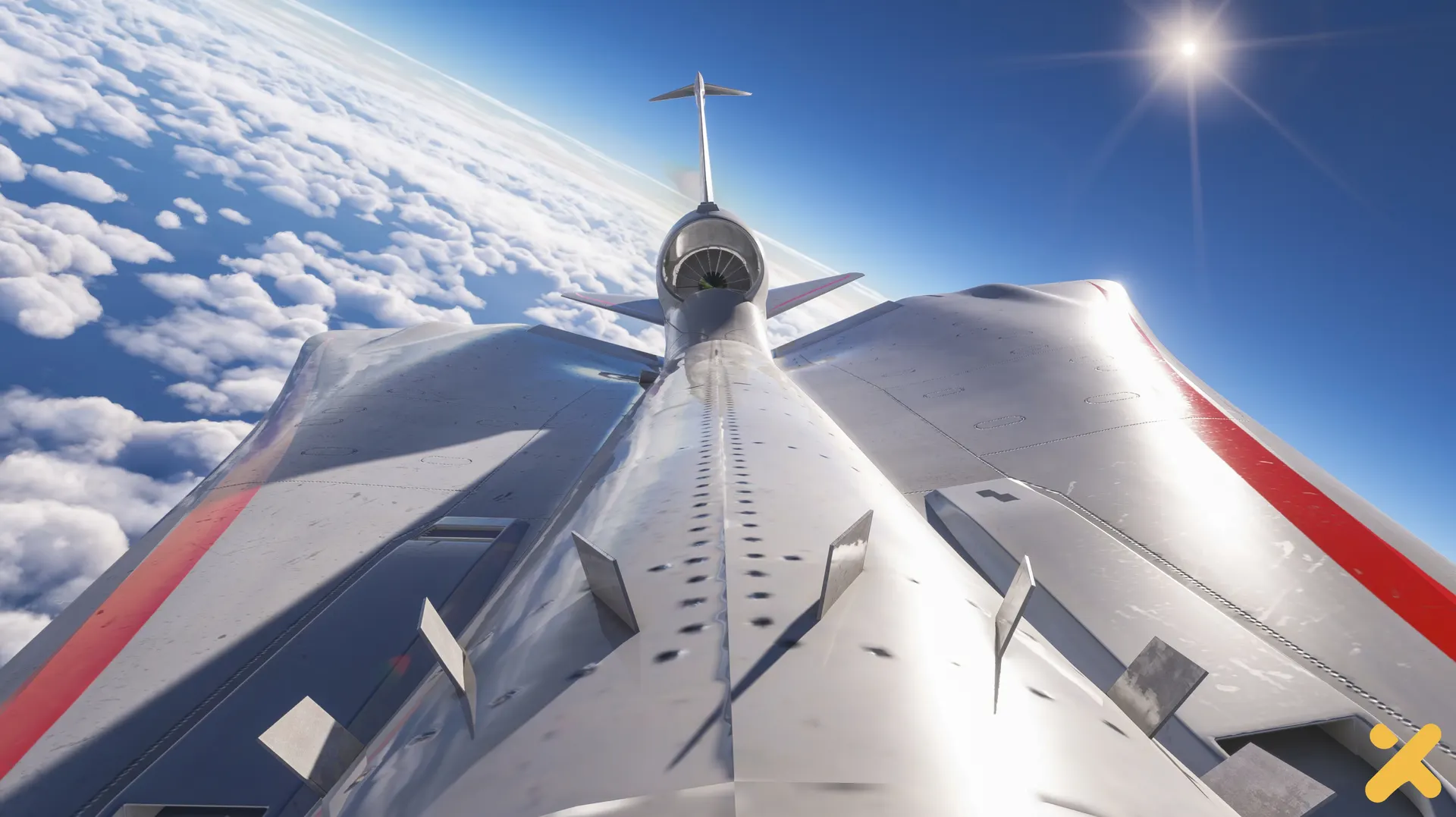
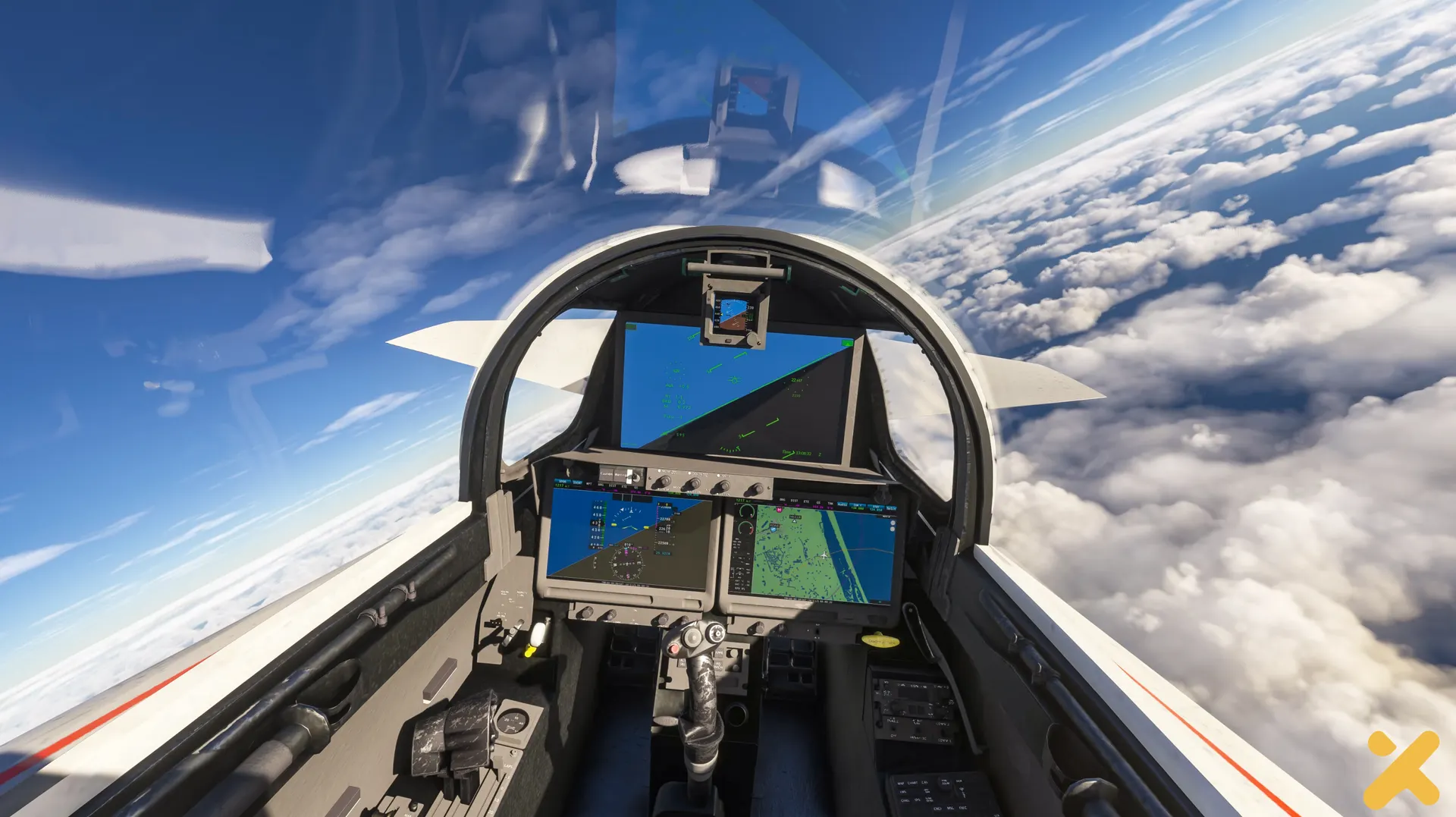
The NASA X-59A QueSST is constructed of advanced aluminum alloys and carbon fiber composite materials that balances light weight and structural integrity of the airframe during supersonic flight. It features a needle-like fuselage with its cockpit mounted near its midsection and a highly swept “double delta” main wing with no dihedral angle. It has steeply swept canard foreplanes just forward of the cockpit and a traditional empennage comprising a steeply swept horizontal stabilizer and a steeply swept vertical stabilizer. It has a smaller horizontal stabilizer atop the vertical stabilizer. Due to the long nose of the aircraft inhibiting pilot view, engineers developed an eXternal Vision System (XVS) comprising several high-definition forward-facing cameras, a powerful image processing system, and a 24-inch cockpit monitor to produce a real-time, high-resolution panoramic view for the pilot.
The NASA X-59A QueSST measures 99 feet, 7 inches in length, stands 14 feet in height, and has a wingspan of 29 feet, 6 inches. It is powered by an afterburning turbofan engine that delivers up to 22,000 pounds of thrust with afterburner. Engineers mounted the intake for the powerplant atop the rear fuselage to minimize noise from the engine and shockwaves the intake generates. The aircraft, once tested to full capacity, is expected to cruise at Mach 1.42 (937 miles per hour) at an altitude of 55,000 feet above sea level.