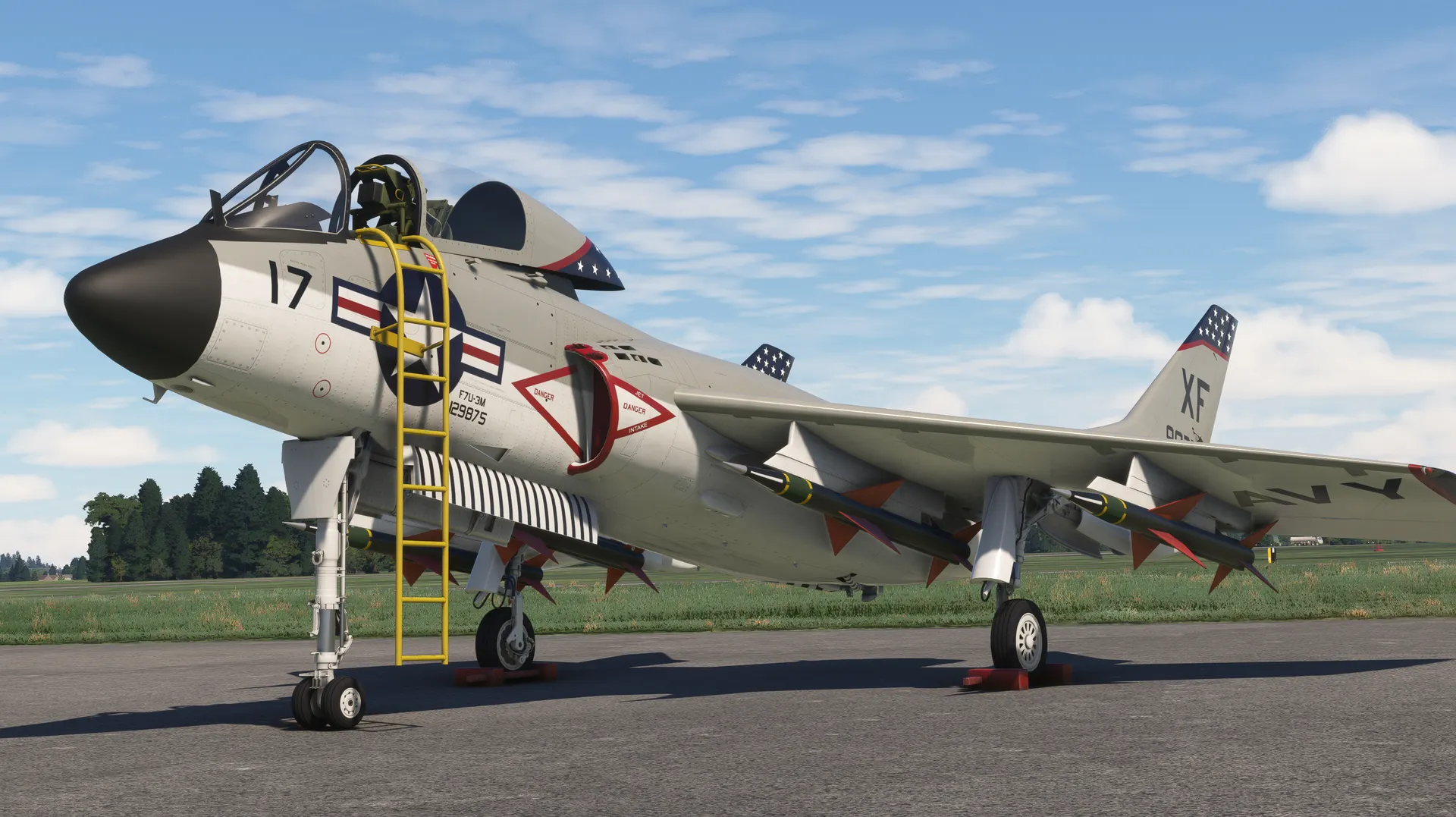
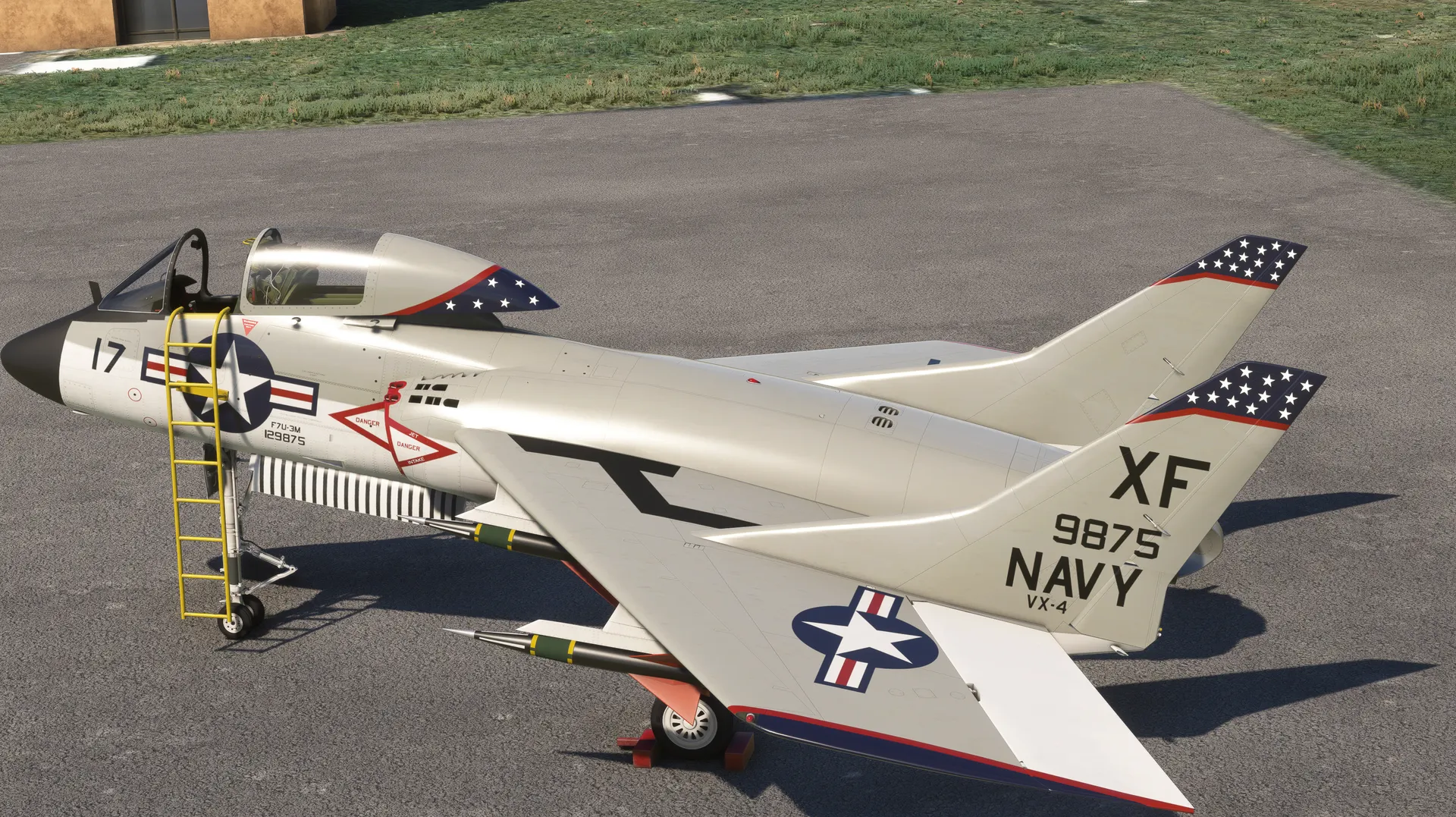
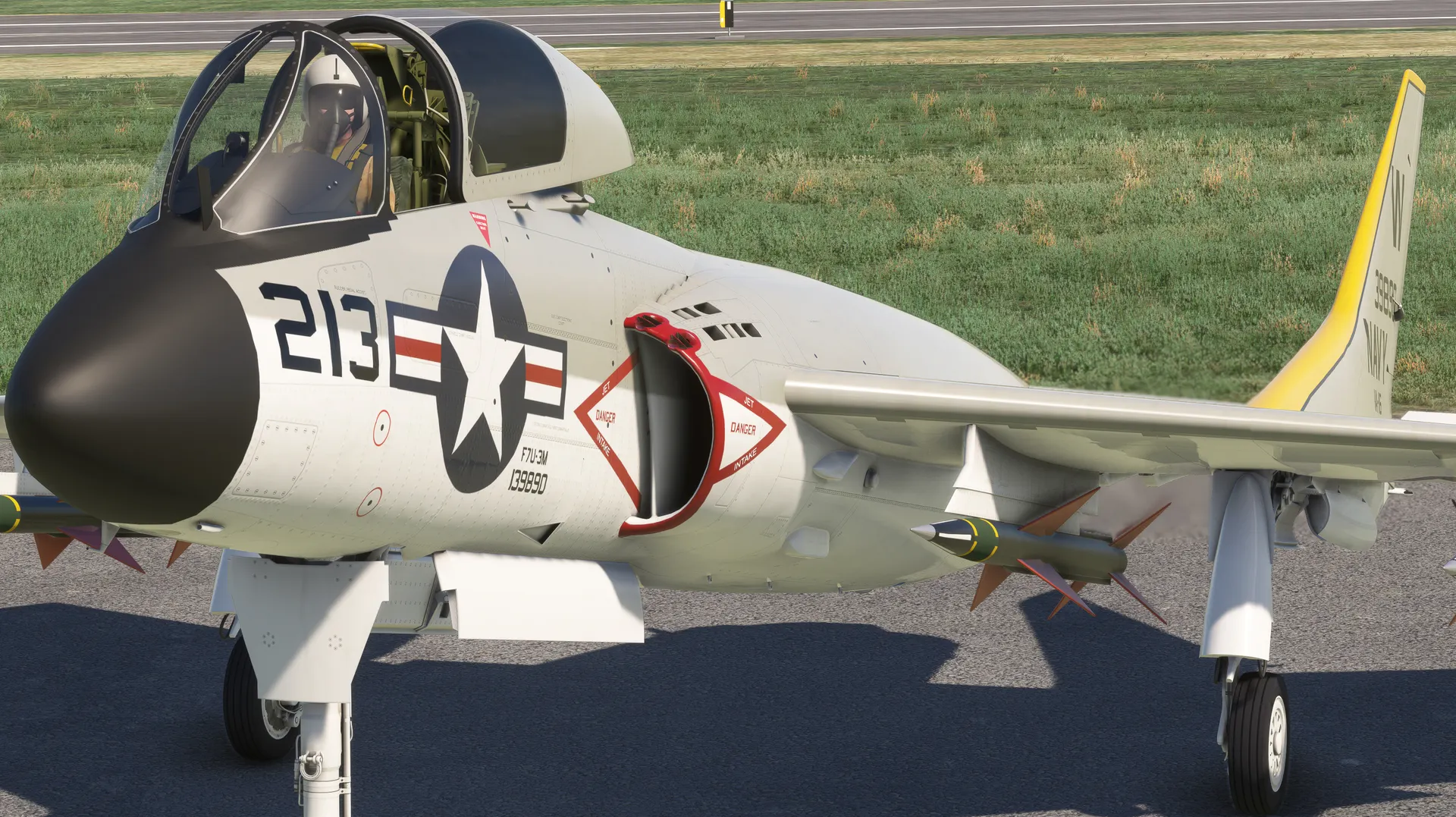
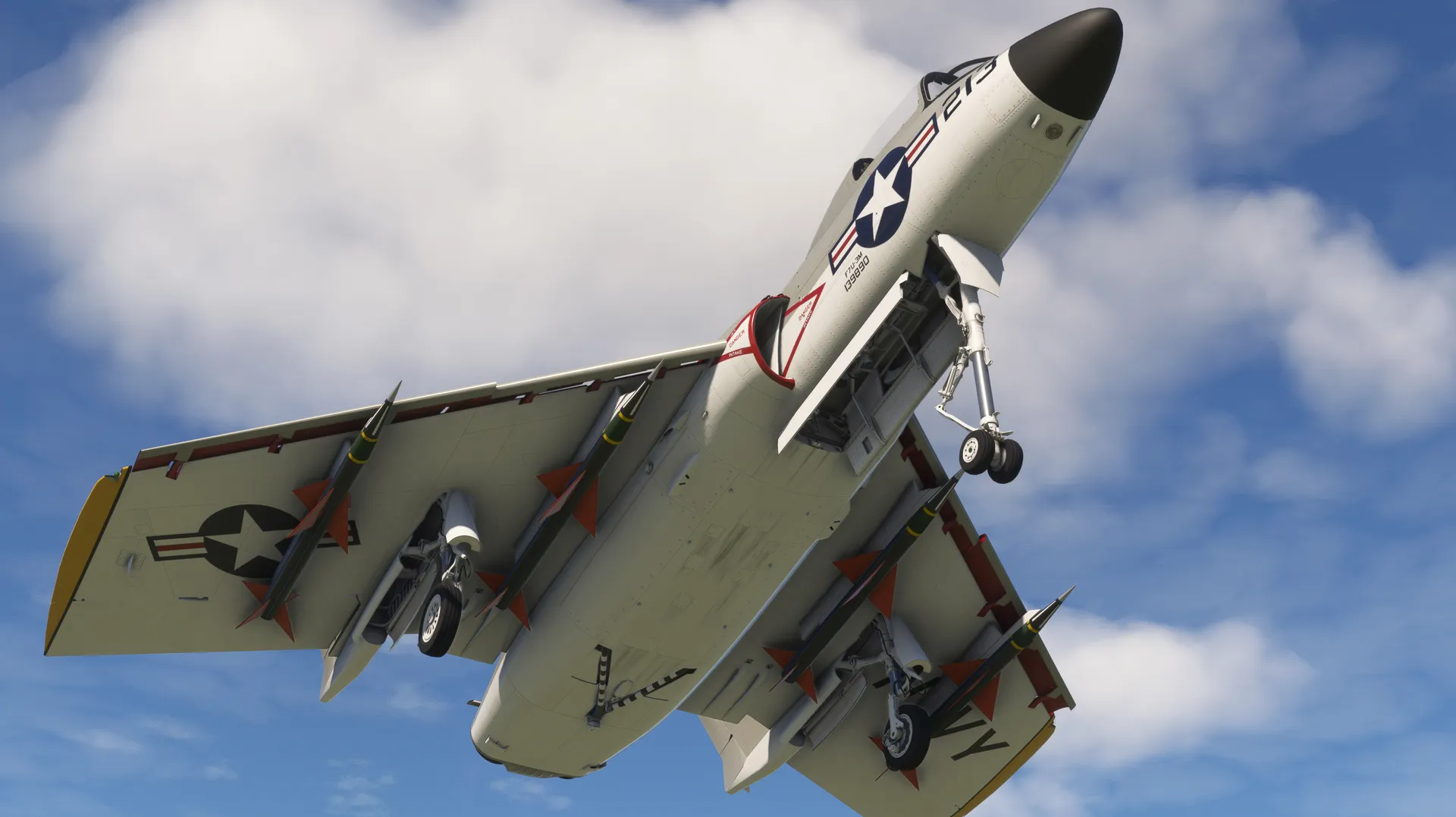
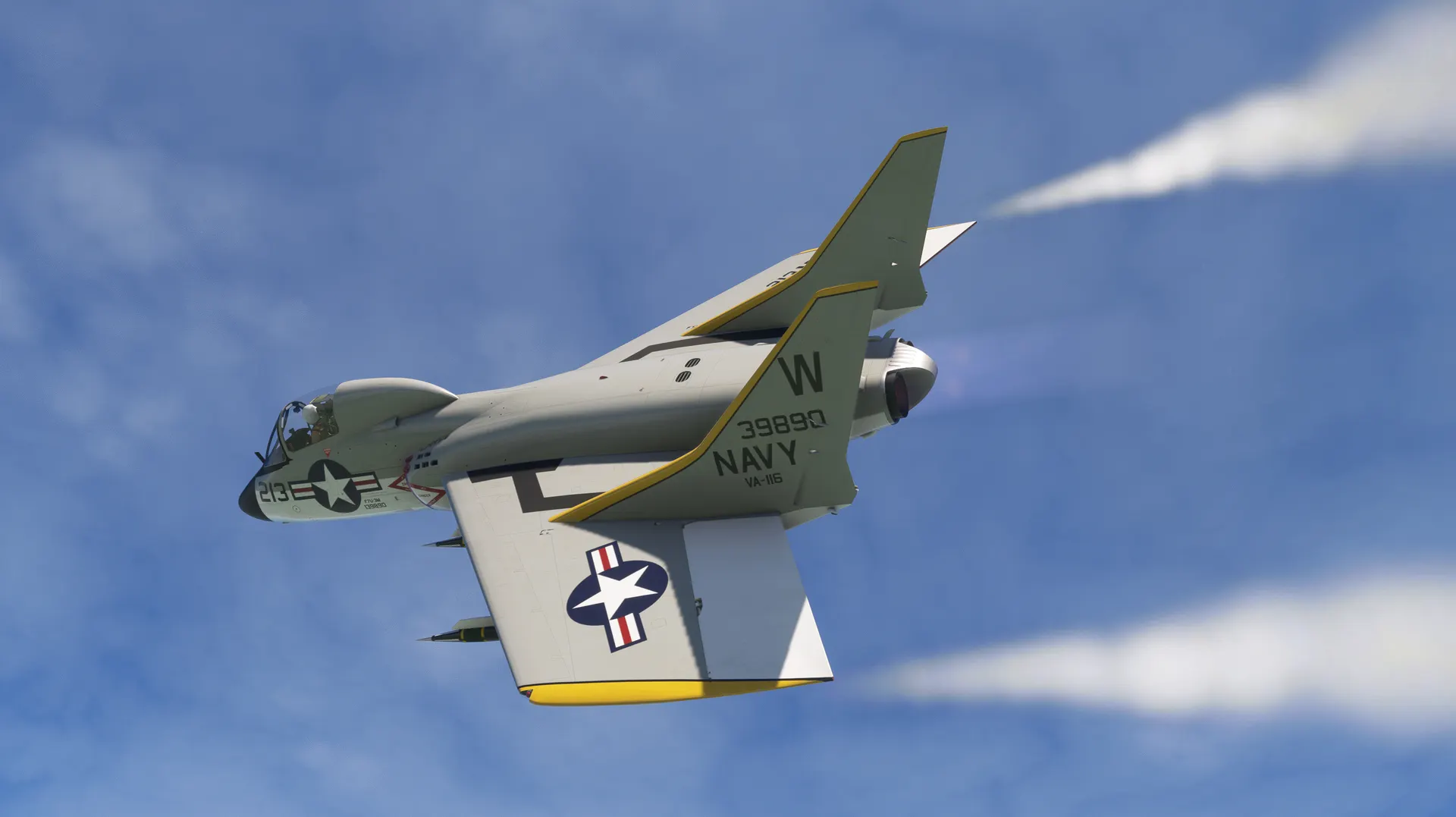
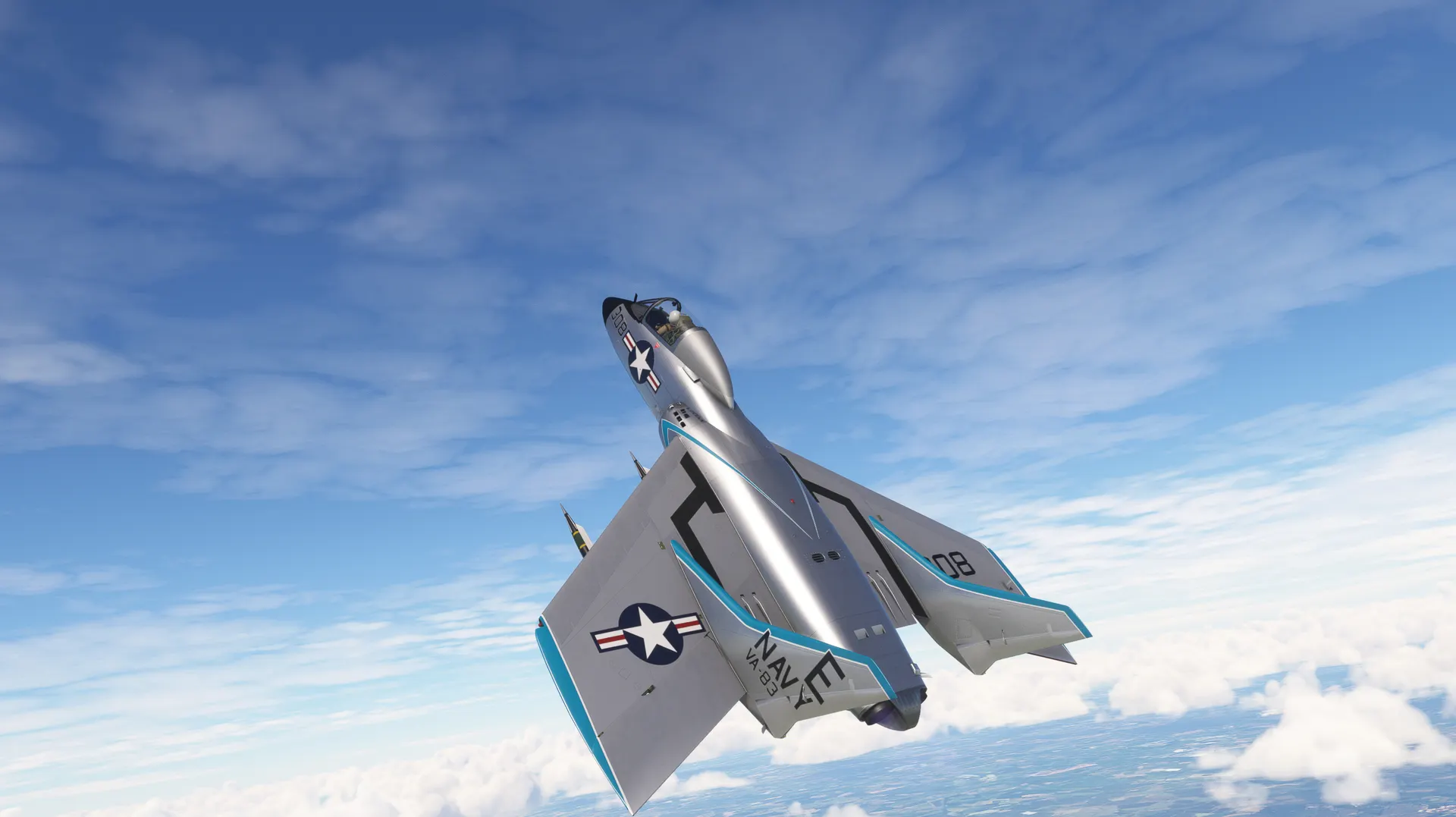
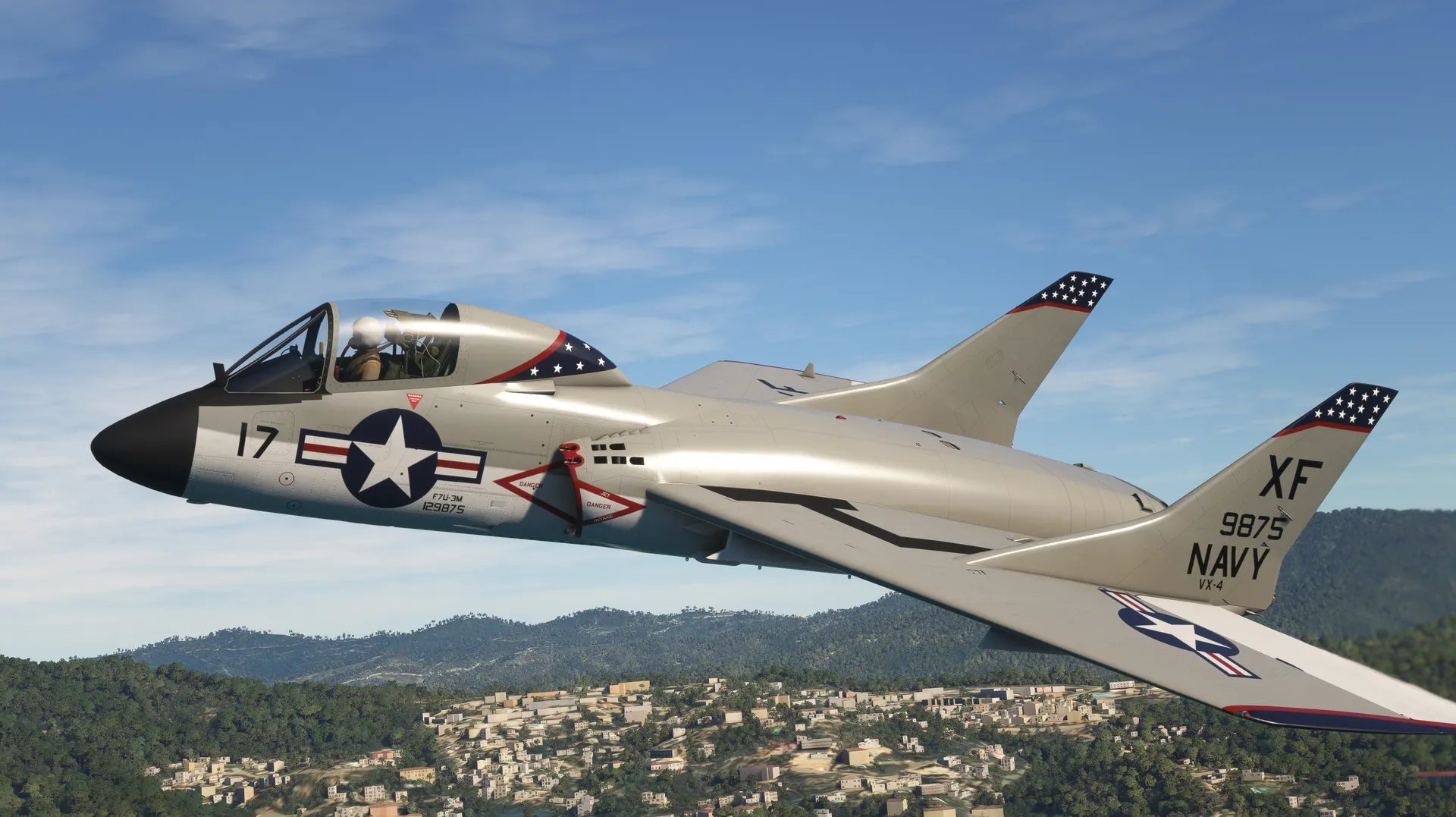
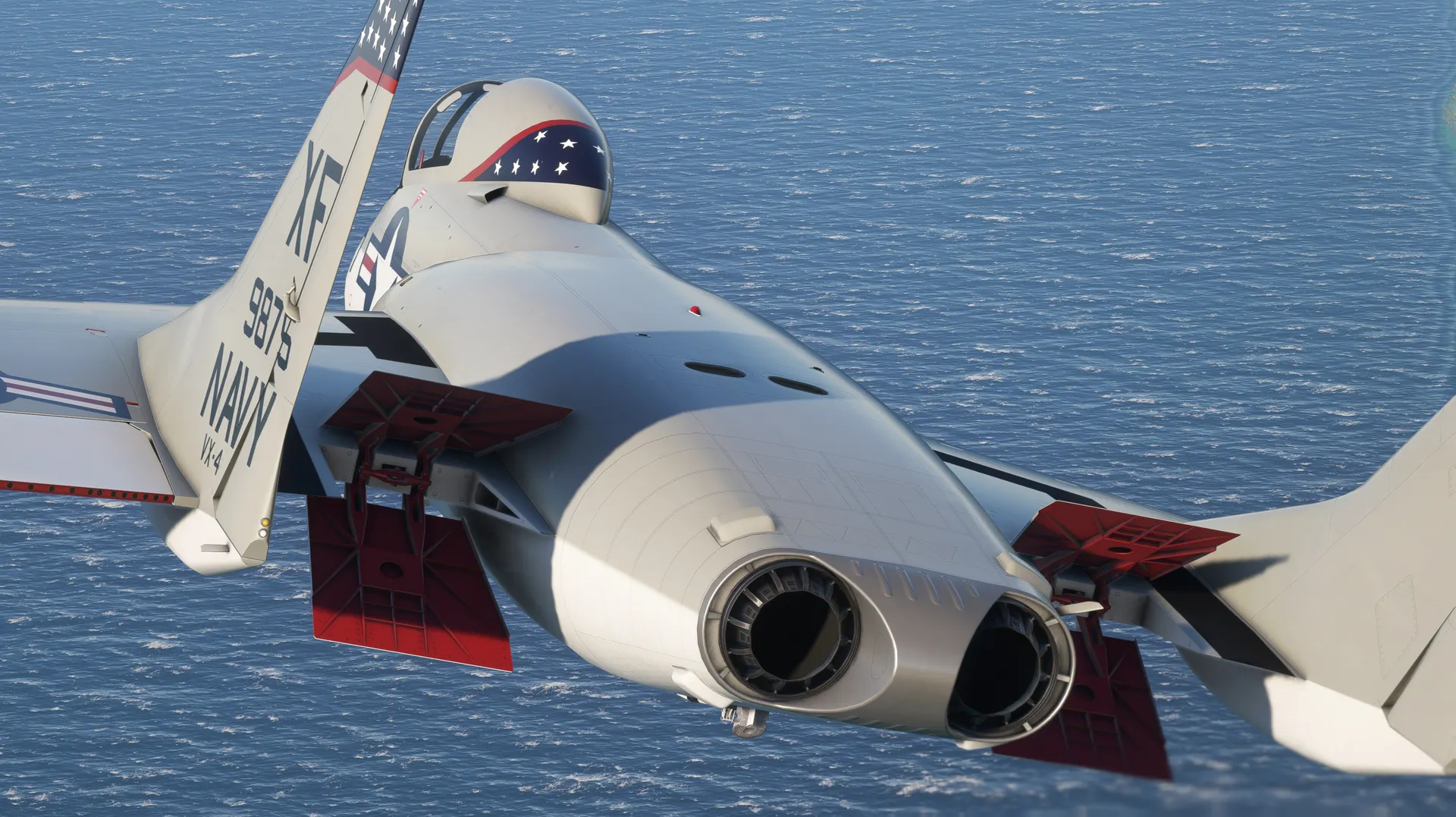
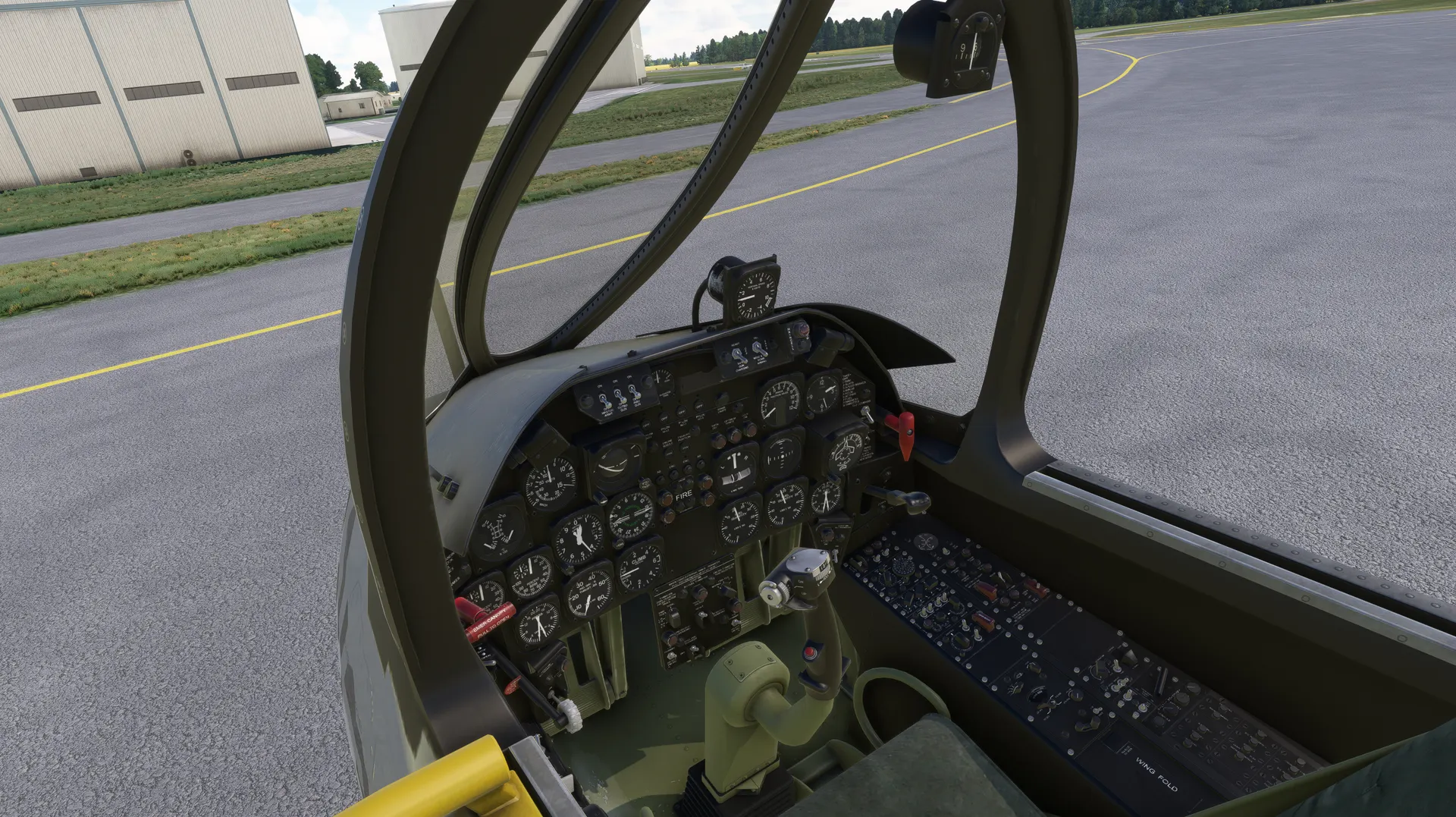
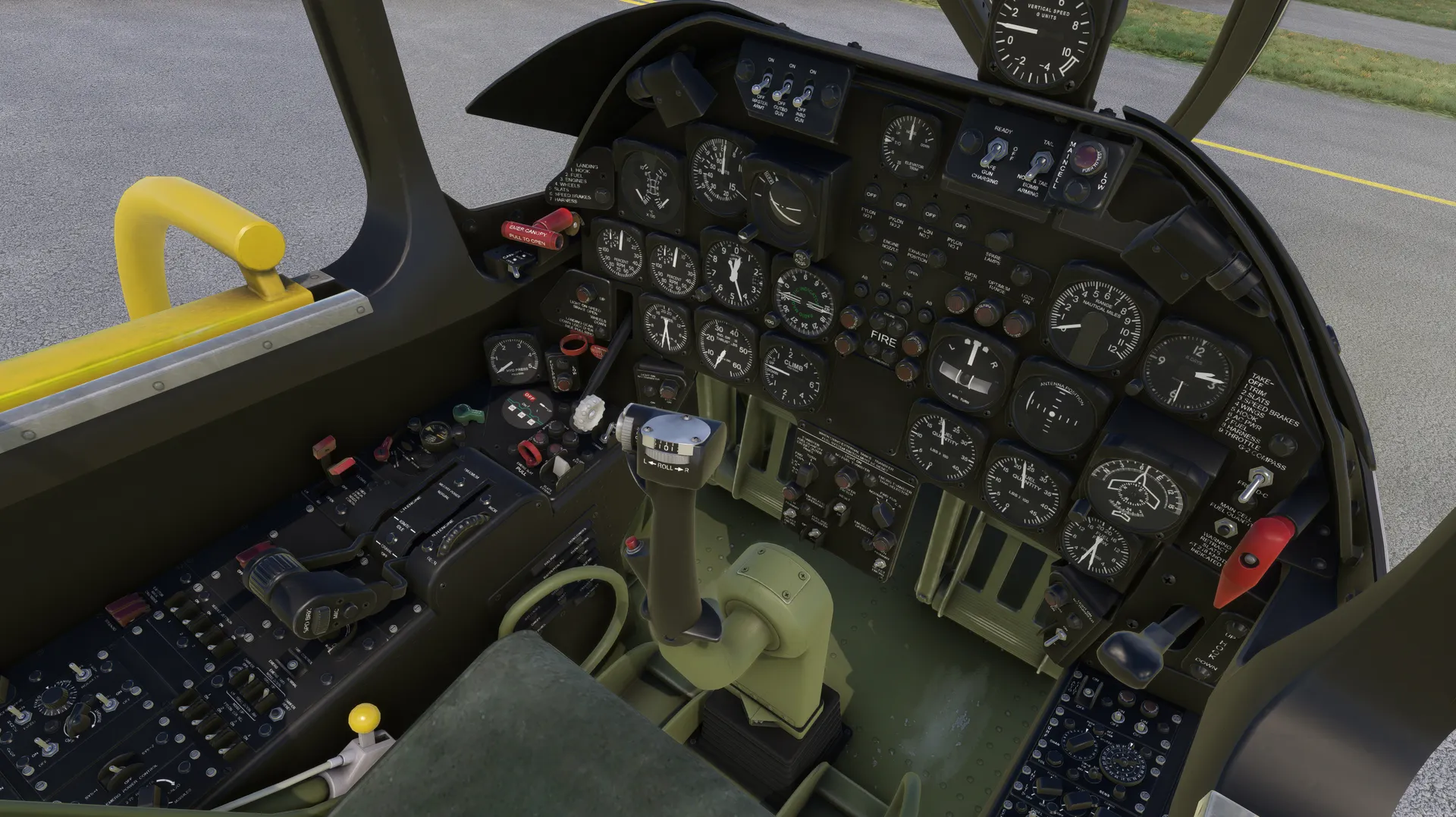
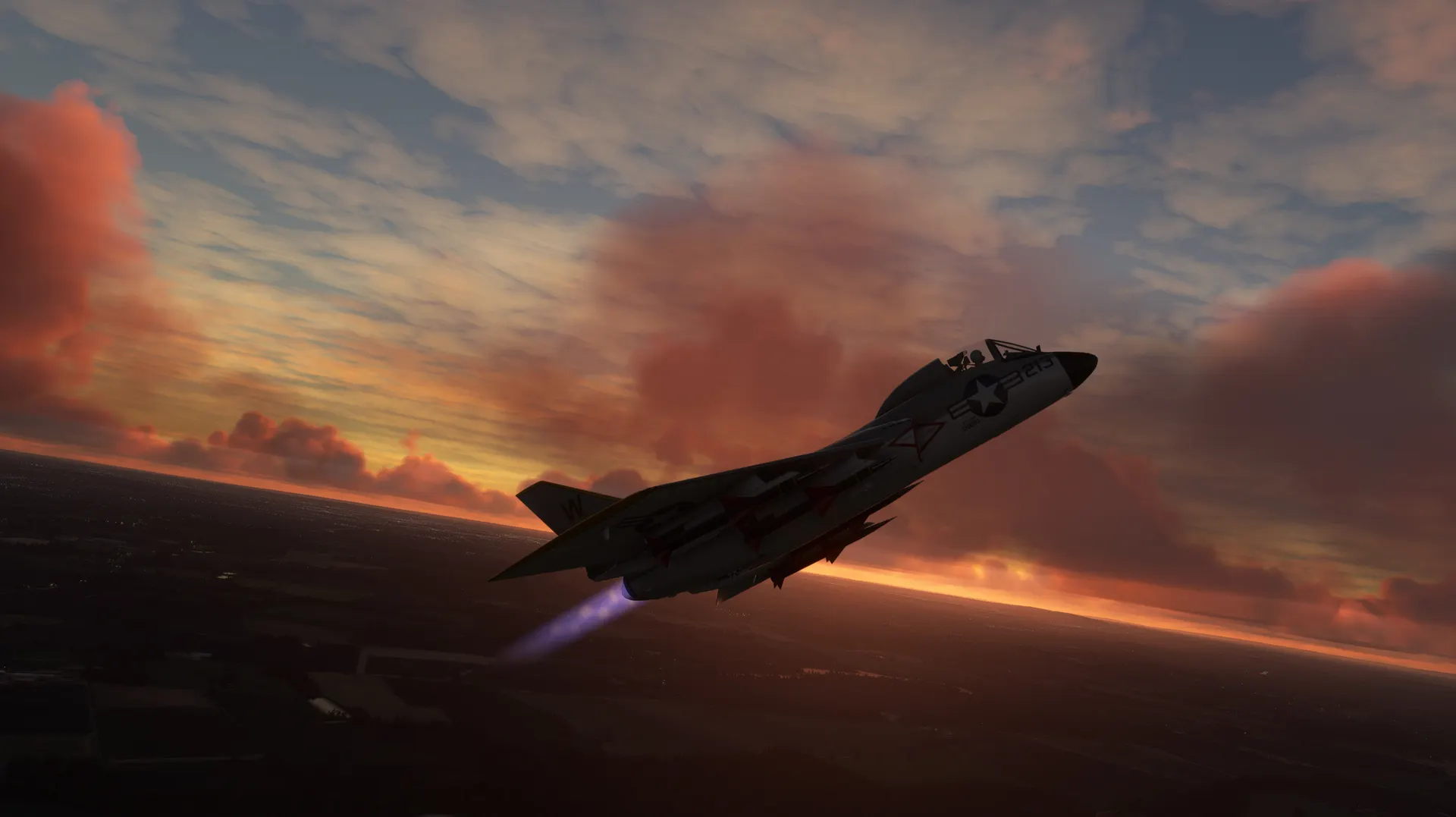
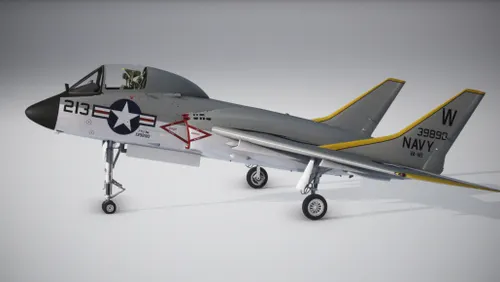
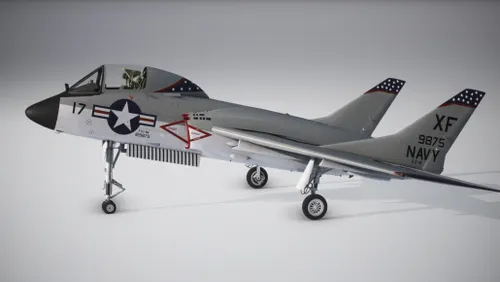
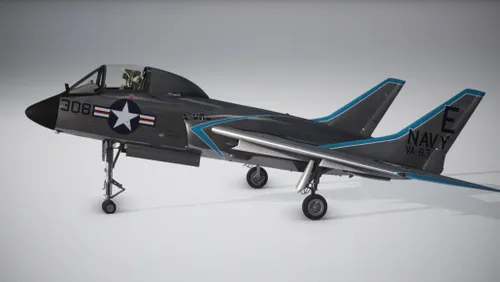
The F7U Cutlass is a single-seat, twin-engine, multi-role jet combat aircraft developed and manufactured by American aerospace producer Chance Vought. Upon its debut, the carrier-capable Cutlass was considered far ahead of its time due to its unique semi-tailless design, swept wings, hydraulic flight controls, and use of afterburners. It took its maiden flight on September 29, 1948, and entered service in 1951. Chance Vought produced a total of 320 airframes across several variants of the Cutlass. Today, several F7U-3s are preserved in museums and private collections, although none remain in flyable condition.
Chance Vought began work on what would become the F7U shortly after the U.S. Navy released a request for proposals for a carrier-capable multi-role combat aircraft on June 1, 1945. The specifications outlined a platform that could perform the missions of interception, fleet defense, surface attack, and light bombing. It needed to be able to fly at speeds up to 600 miles per hour and at altitudes up to 40,000 feet above sea level. Engineers at Chance Vought began the initiative by focusing on research that the German military had undertaken on high-speed aerodynamic flight during World War II, including swept wing engineering. Chance Vought’s design was revolutionary: it features a swept main wing that is blended into the fuselage and has twin vertical stabilizers for yaw authority. It has a high-visibility bubble canopy and a retractable tricycle undercarriage with an extended nosewheel leg to maintain high angle-of-attack for take-offs. The prototype of the aircraft took its maiden flight on September 29, 1948, and the first of several production versions entered service in July of 1951. The F7U holds the distinction of being the first American tailless fighter and the U.S. Navy’s first swept-wing jet and the first with afterburners.
The cutting-edge aircraft experienced several problems related to the novel technology it used. Non-afterburning Allison J35-A-29 jet engines powered the initial production version of the Cutlass, which underperformed and earned the F7U the nickname “Gutless Cutlass.” The aircraft also suffered hydraulic system leaks, unreliable landing gear operation, inflight engine fires, and a dangerous post-stall phenomenon called “wicked spin” where the aircraft tumbled and gyrated uncontrollably. Over one-quarter of all Cutlasses built were destroyed in accidents, resulting in the deaths of 25 pilots.
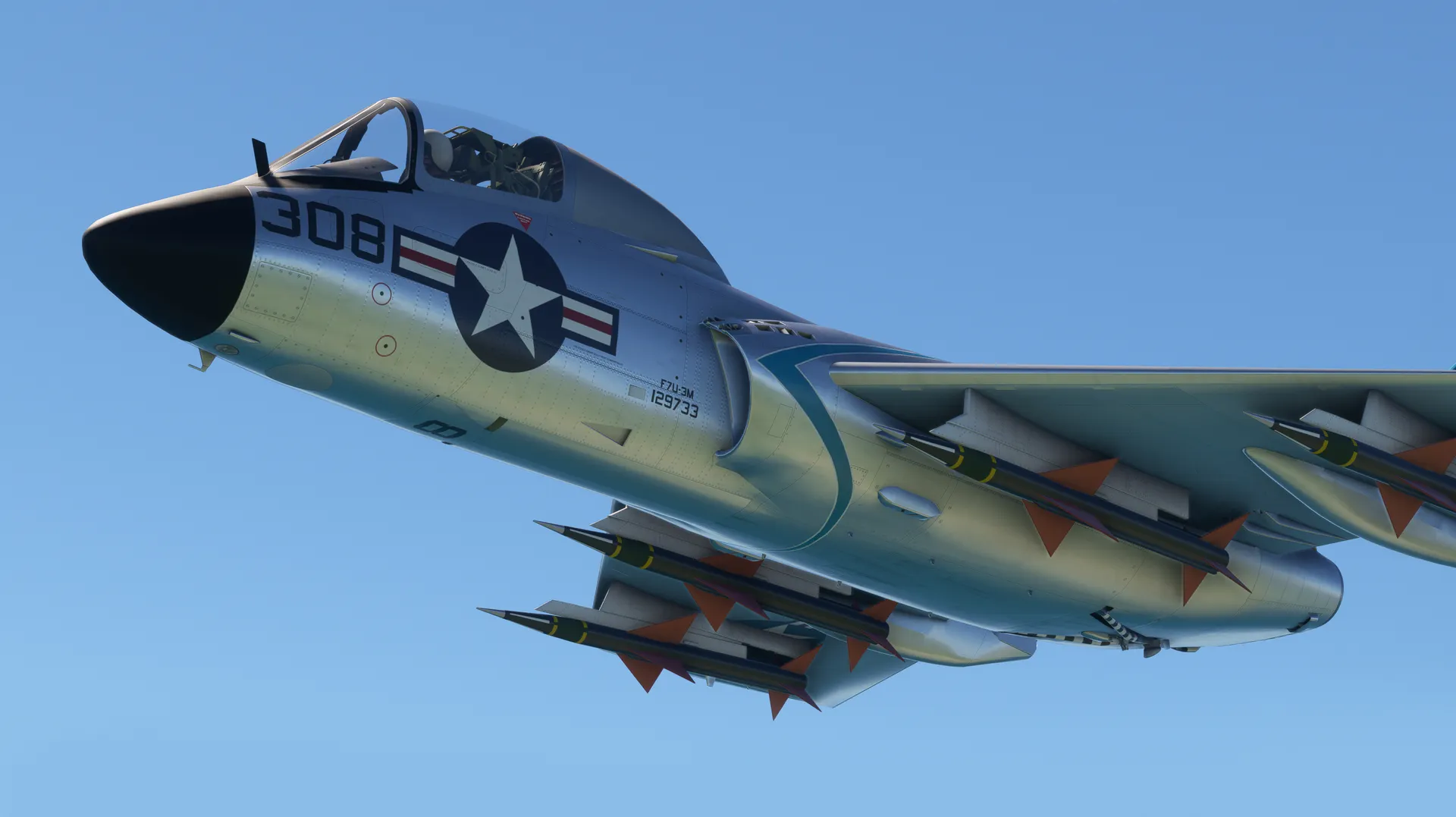
Despite these mishaps, Its unique design engendered several favorable performance attributes, notably its stability as a bombing platform, high maneuverability, and roll rate of 570 degrees per second, triple that of most fighter jets of the time. 13 Navy squadrons operated the F7U-3, including VA-66 and VF-81. The F7U-3M variant, a missile-capable conversion, could carry four AAM-N-2 Sparrow I air-to-air missiles, supplementing its four 20mm cannons. Attack Squadron VA-83 deployed in March of 1956 with the F7U-3M, becoming the first Navy squadron to deploy overseas with air-to-air missiles. In 1953, the Navy’s Blue Angels used the Cutlass in an adjunct to their main show as a demonstration of American aerospace innovation. The model was retired from active service by March 2, 1959, replaced by the F9F-8 Cougar and the F8 Crusader.
The F7U-3 measures 41 feet, 4 inches in length, stands 14 feet tall, and has a wingspan of 39 feet, 8 inches. It is powered by two Westinghouse J46-WE-8b afterburning turbojet engines, each of which generates up to 4,600 pounds of thrust in military power and up to 6,000 pounds of thrust with afterburner. It has a combat range of 920 miles, a service ceiling of 40,600 feet above sea level, and a maximum climb rate of 14,420 feet per minute. It cruises at 560 miles per hour, has a top speed of 697 miles per hour, and it stalls at 129 miles per hour.